K is for Krill

euphausid
K is for Krill

K is for Krill

Scientific name: Euphausia fallax

Tagalog: Alamang

A Krill is different than a shrimp and different than a prawn.

Krill are Krill.

They are open ocean travelers and the size of a jellybean

They munch of delicious green diatoms.

Their sheer numbers are a super force that

create a floating cloud with the power to turn the immense blue ocean a radical shade of pink.

Everyone in the sea depends on these tiny pink crustaceans to keep things running smoothly.

The power of one pales with the power of a billion trillions!


J is for Jellyfish loving Juvenile Jack

jack aka golden trevally

J is for Jellyfish loving Juvenile Jack

Scientific name: Gnathanodon speciosus

Tagalog: Leson & Labong Labong

Juvenile Jacks love Giant Jellyfish.

They have tough skin so the jellyfish tentacles only sting a little bit.

Having jellyfish protection when a big fish wants to eat you is worth a little sting.

This bright yellow jack is also known as Golden Trevally and like most trevally, they get HUGE.

Jacks are truly a « Jack of all trades ». Jacks patrol their reef, but they can also compete in the open ocean or expore sandy shallows or swim around the mangroves.

They are large and in charge predators and even boss around the reef sharks.

At least they are once they grow up, and to do that they have to survive with tricks like swimming with jellyfish.

I is for Ichthyologist

Ichthyologist and Mermaid discussionI is for Ichthyologist

ICK-THEEE-O-LOW-GEST     –  Ichthyologist!

This is a name for a person often found in the water. They are scientists who study fish, count fish, dream about fish and collect data to unlock the secret lives of fishes.

Ocean enthusiastic kids have inquired on how to become a mermaid. The answer lies in the theme of this book and my response back to these mermaid scientist “sea fans” focuses on the importance of gaining knowledge about the ocean and all its fishes, and that creating this deeper understanding between yourself and the ocean is the crux of becoming a mermaid. The study of Ichthyology is an age old mermaid tradition.

To all aspiring Mermaids aka Ichthyologists I say: Learn! Read! Enjoy! and before long, you will understand what it is to be half fish.

Side note:  The Father of Ichthyology was a swedish naturalist Peter Artedi, who mysteriously disappeared in the waters of Amsterdam. This epitaph was written in latin by Anders Celsius, translated by George Shaw and quoted in Linnaeus’s publication of the Ichthyologia: Here lies poor Artedi, in foreign land pyx’d

Not a man nor a fish, but something betwixt,
Not a man, for his life among fishes he past,
Not a fish, for he perished by water at last.

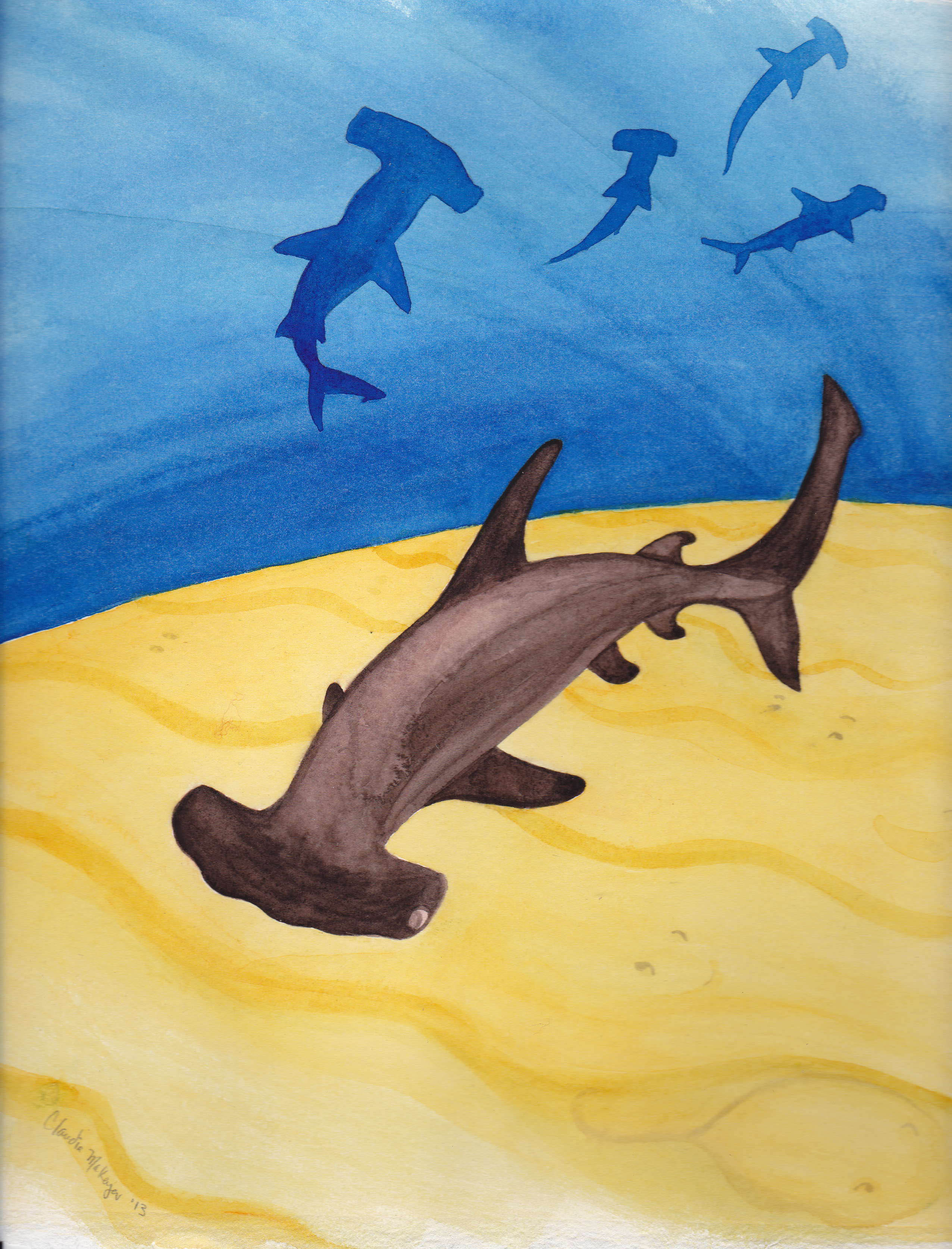
H is for Hammer Headed Hammer Head Shark

hammer head shark
Scalloped Hammer Head Shark

H is for Hammerheaded Hammerhead Head Shark

Tagalog: Crosan

Scientific Name: Sphyrna lewini

This shark has a humungous hammer shaped head.

A Hammerhead can find his favorite foods hidden under the sand, like the stingray.

His head has pores filled with electric jelly that can sense other animals even when they are hidden.

You can also call these jelly pores “electroreceptors” or “galvanic cells”

The bigger the head, the more pores and therefore it’s easier for this shark to detect electric impulses from other sea creatures.

Finding invisible things is this sharks special power so playing hide and seek with him is not recommended.

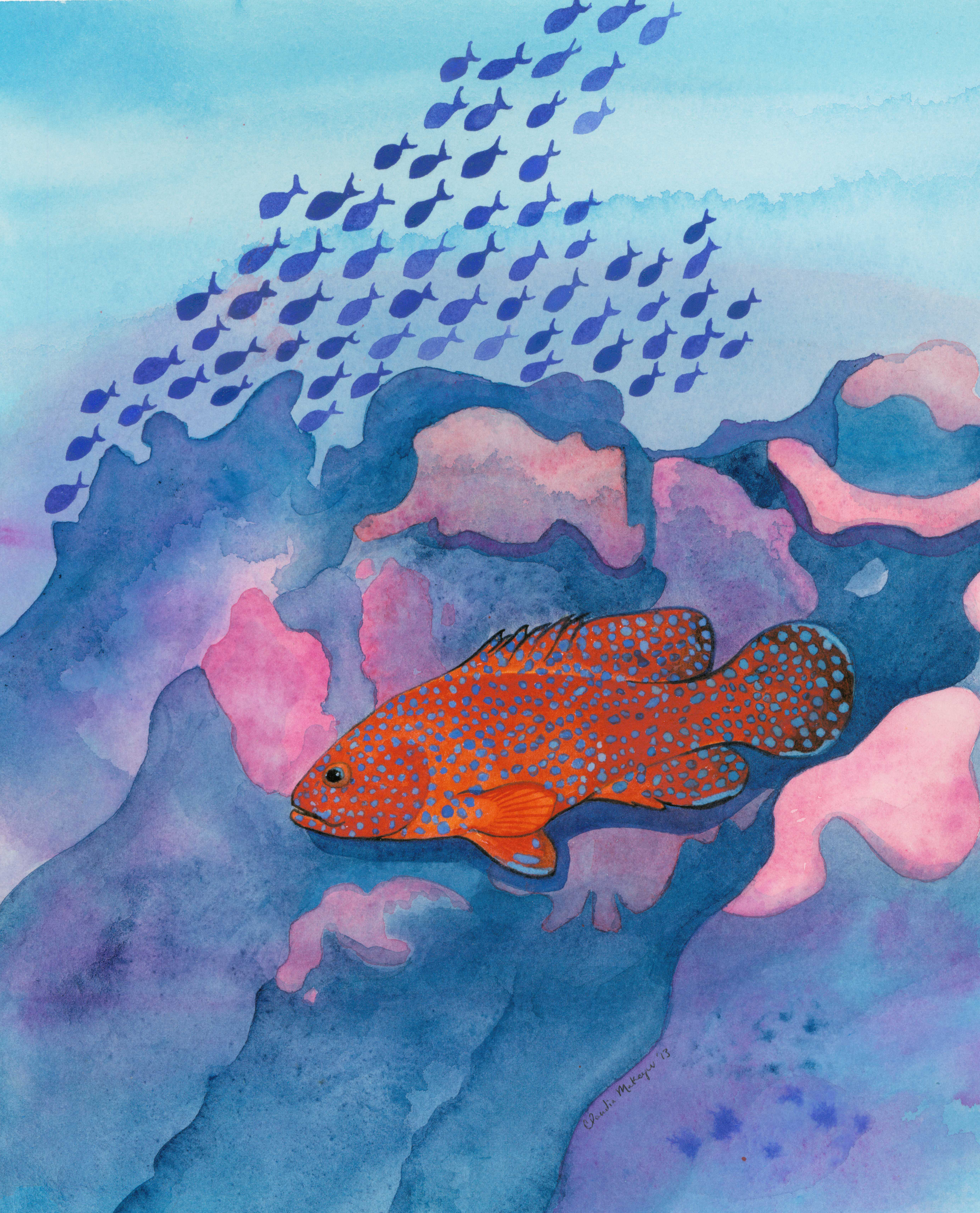
G is for Grouper

Coral Grouper
Lapu Lapu

The Coral Grouper

Tagalog: Lapu Lapu

Scientific name:  Cephalopholis miniata

The Grouper is a cruiser.

Her job is to patrol, ponder and protect her piece of reef from other big predators. Her flashy colors won’t betray her. The deeper she patrols away from the sunlight, the more her brilliant red fades away, blending her into this homey reef background until she is almost invisible.  This is perfect for sneaking up on intruders or surprising tasty unsuspecting morsels.

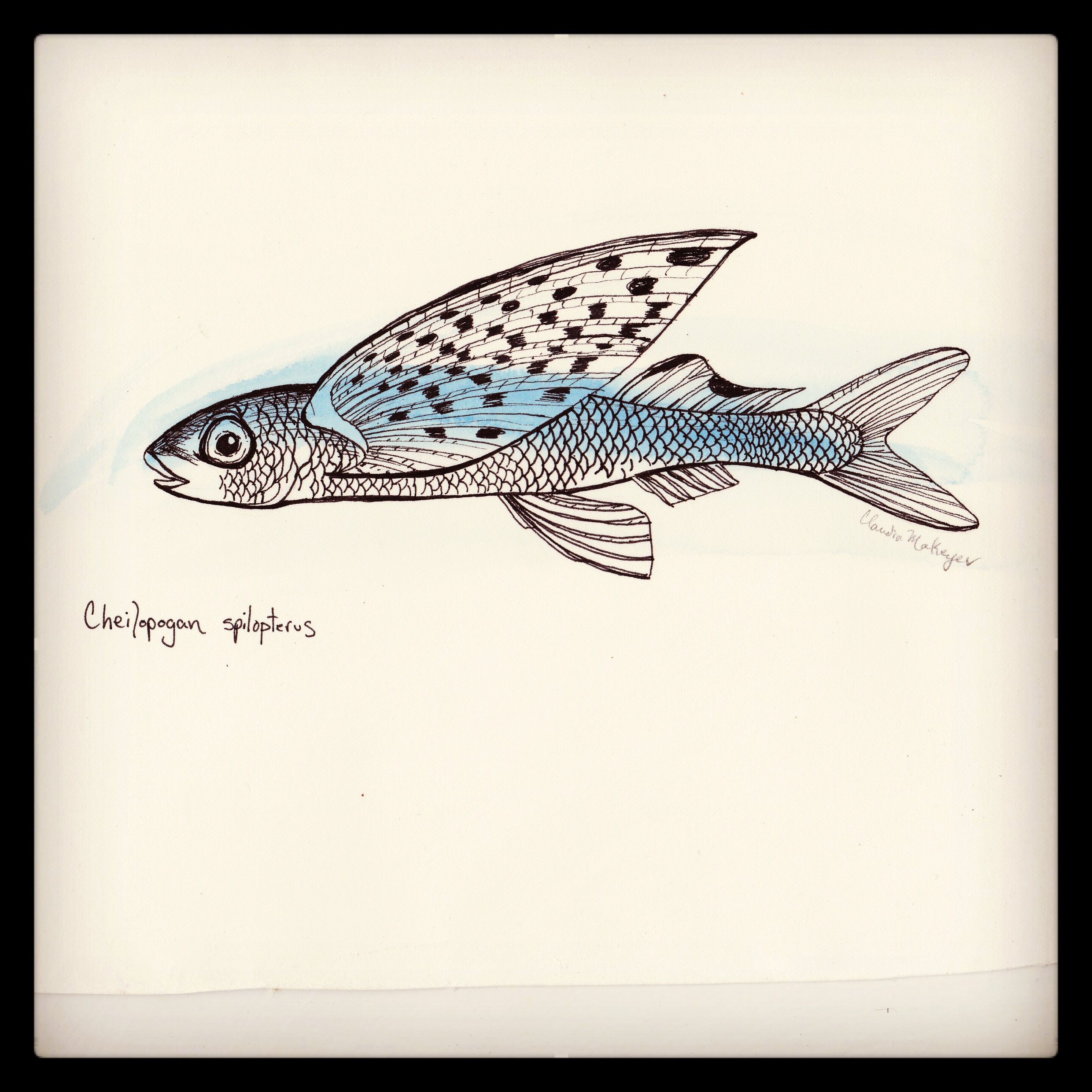
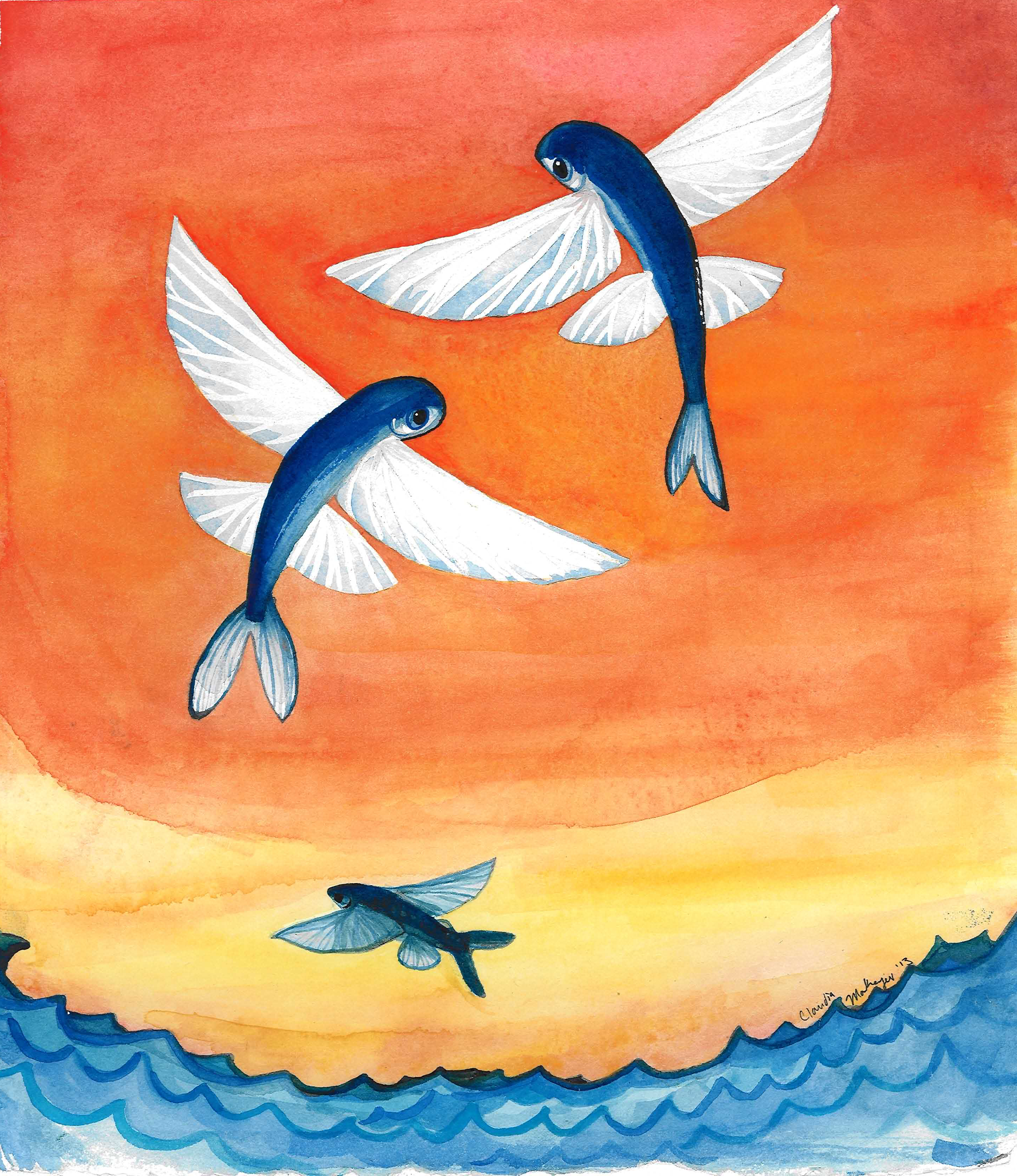
F is for Flying Fish Fins

Cheilopogon spilopterus- flying fish

flying fish watercolor by Claudia Makeyev

These far out pectoral fins are actually wings

F is for Flying Fish Fins

Tagalog: Isdang lawin

Scientific name: Cheilopogon arcticeps

Flying fish pectoral fins make fantastic wings. With these fins, one can jump out of the water to enjoy the thrill of flying on the salty sea air.  The use of these fins is a fast way to elude feisty flying fish loving predators.  There is nothing more satisfying for a full fledged flying fish than keeping pace with the flying fish school and frolicking on ocean currents of both air and water. There are few fishes in the ocean that have the fins to enjoy this type of freedom.

Garrison Keeler just read this poem and, trees aside, it felt like flying fish to me:

Flying

by Richard Wilbur

Treetops are not so high
Nor I so low
That I don’t instinctively know
How it would be to fly

Through gaps that the wind makes, when
The leaves arouse
And there is a lifting of boughs
That settle and lift again.

Whatever my kind may be,
It is not absurd
To confuse myself with a bird
For the space of a reverie:

My species never flew,
But I somehow know
It is something that long ago
I almost adapted to.

“Flying” by Richard Wilbur, from Anterooms. © Houghton Mifflin, 2010.

E is for Eel

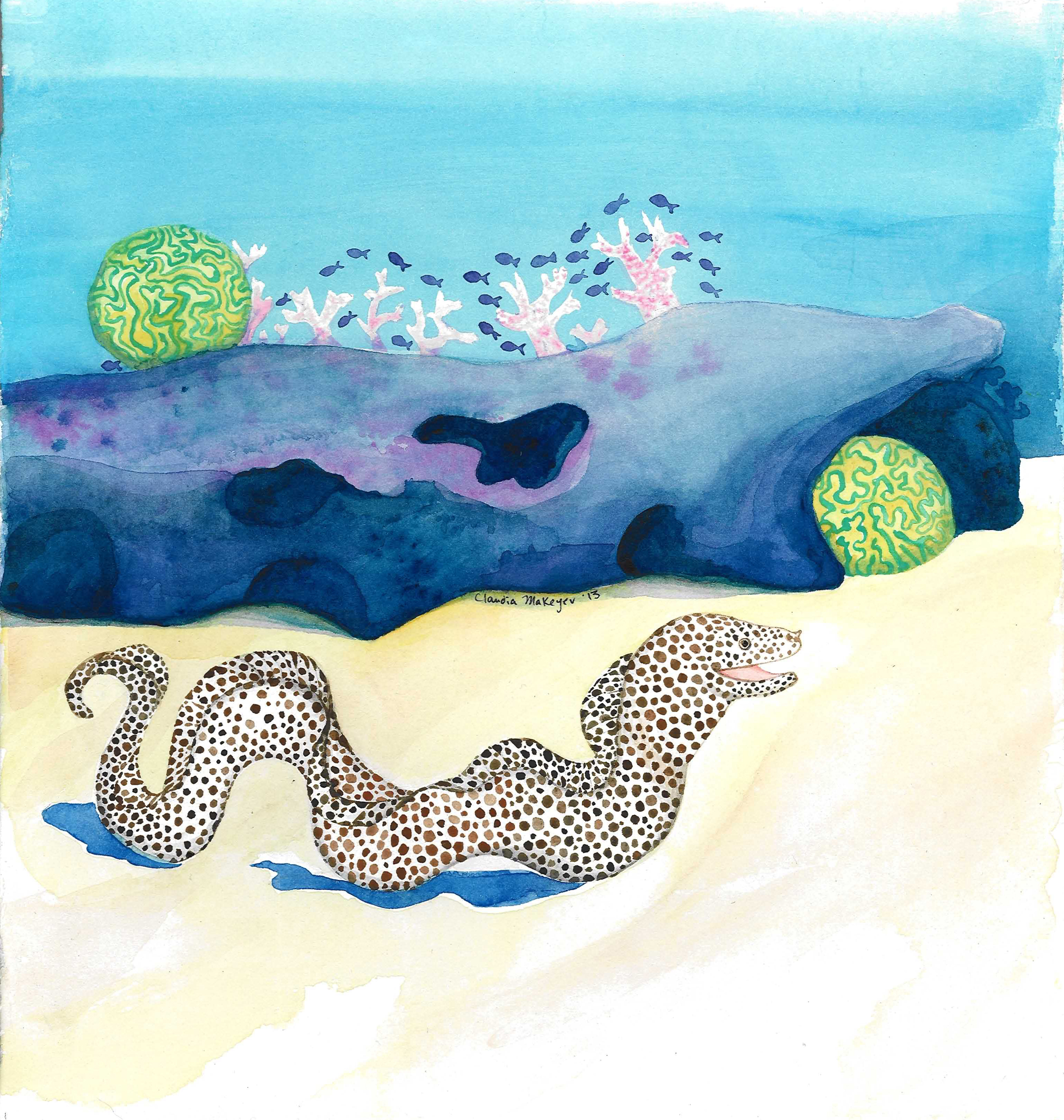
Spotted Moray Eel by Claudia Makeyev

E is for Elongate Eel

Tagalog: Indong

Scientific Name: Gymnothorax isingteena

aka The Spotted Moray

This eel is an eeeelongate fish, his long body is ideally suited to squeeze through small holes in the reef and chase small fishes for dinner.

An interesting hunting partnership developed between Moray eels and Groupers. The Grouper sees where a school of fish have hidden themselves from him in the coral reef, because he is too big to go into these small holes he goes off to find his friend the eel. This eel is a bit nearsighted so the grouper floats right in front of his face and shakes his head back and forth, back and forth. this is their secret code for:  “I know where there are some tasty small fish, follow me”.  The eel follows the grouper to the place in the reef where the small fish are hiding. He wriggles in and chases them out for the grouper to catch and hopefully manages to catch a few for himself along the way.

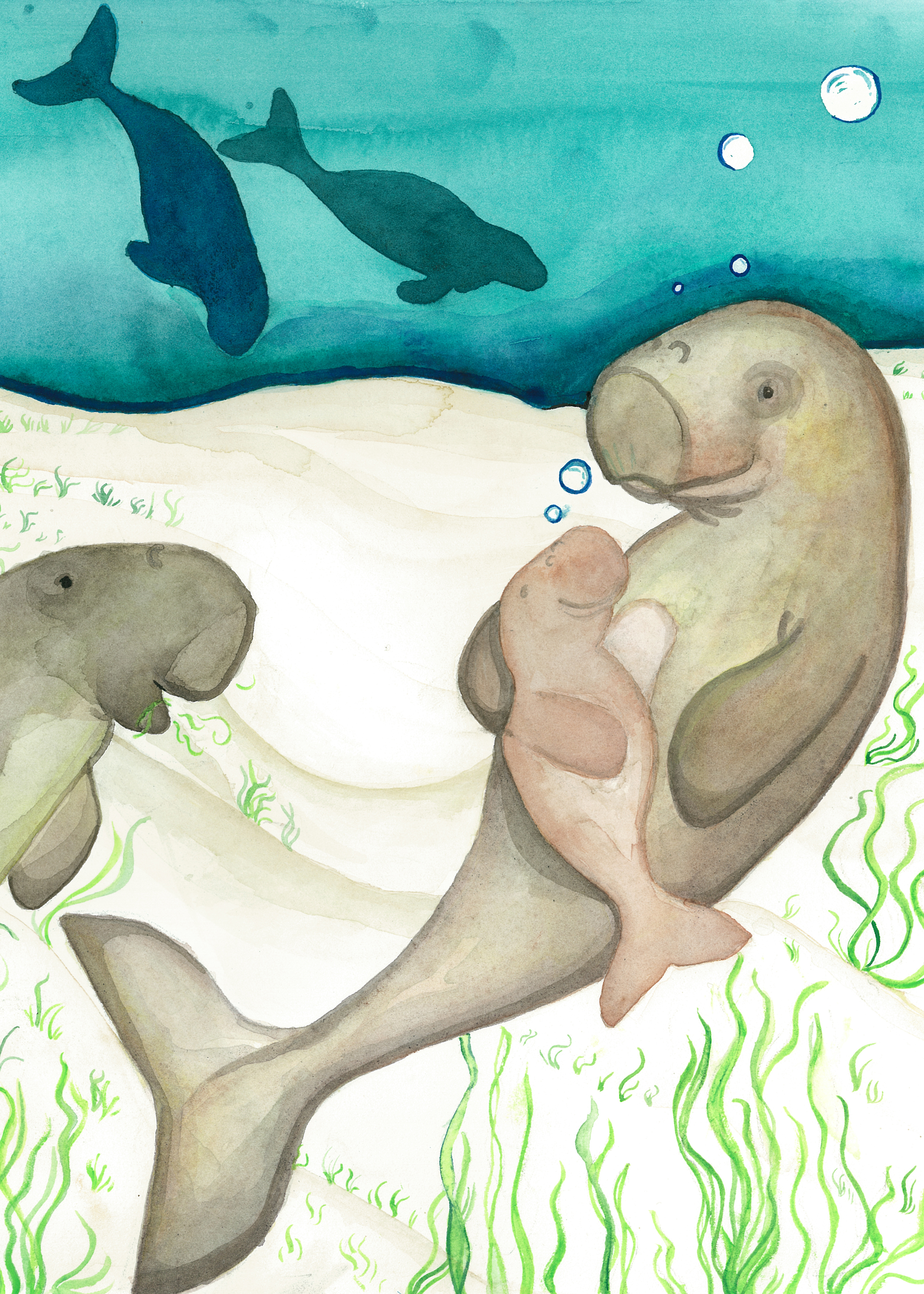
D is for Dugong

Dugongs
D is for Dugong
a water color by Claudia Makeyev

D is for Dugong

Tagalog: Duyong

Scientific name: Dugong dugon

We delight in devouring delicious, delicate sea grass shoots.

We’re shaped like manatees and have dolphin tails to boot
Underwater we swim, sleep, and eat but we are not fish.

Dugongs are actually mammals, Isn’t that neat?

C is for Colorful Coral Creatures

red coral
C is for Colorful Coral Creatures
A Watercolor
by Claudia Makeyev

Tagalog: Gasung

Scientific name: Corallium spp.

We all live attached together underneath the big blue sea.

Up close we each resemble an itty bitty Anemone.

Call us Coral

B is for Brown Banded Bamboo Shark

water color by claudia makeyev
Brown Banded Bamboo Shark
by Claudia Makeyev

The Baby Brown Banded Bamboo Shark likes stripes.

Stripes, like those of the poisonous sea snake, fool potential predators (the dumb ones) and protect this baby from being eaten.

When the Brown Banded Bamboo Shark grows out of his juvenile stripes, he becomes a mature brown.

Unfortunately, most humans are not fooled by the stripes and these little guys are commonly eaten in the islands of The Coral Triangle.


Boding = Tagbanua/Tagalog name for Shark

A is for Anemone

Anemone watercolor
A is for Anemone
~by Claudia Makeyev

I am an Anemone,

A tentacled beast at the bottom of the sea.

It is a beautiful place with a lot of space,

And it used to get quite lonely.

One day a clownfish and some Zooxanthelae

floated by, nestled in and came to live with me.

We are now a happy, multi-species family.

The Anemone, the Clownfish and the Zooxanthellae are a symbiotic threesome found all over the reefs of Palawan.

The Mermaid Islands Corp is coming out with a fun fact filled Alphabet book of the sea creatures we have found in Palawan. Bright watercolors and ocean critter stories promise to be entertaining to mermaids and kids alike. Enjoy these teasers and stay tuned for more updates on how to reserve your book.

Banan = Tagalog/Tagbanua name for Anemone