All are welcome!
How To Be A Mermaid/Marine Biologist
a non profit dedicated to coral reef education, conservation and research
All are welcome!

R is for Reef Realestate
Native Name: Bahura
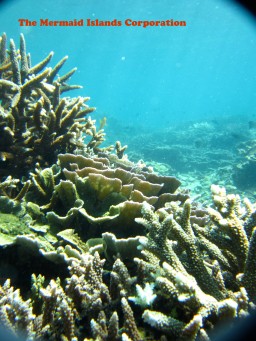
The Reef is an underwater ocean city
Made of the colors & creatures also found in the depths of your imagination.
Brilliant blue angels & purple porcupines
Tangerine sponges & lemon sharks
Dolphin queens & dugong kings
Creepy crawlers, poisonous spines, silky pearls & polka dots
of every shape and size.
Some eat plants, some eat each other.
Forever living, forever breathing, watching, building, swimming and eating.
They dance, enchant and take your breath away.
Forever & ever & ever
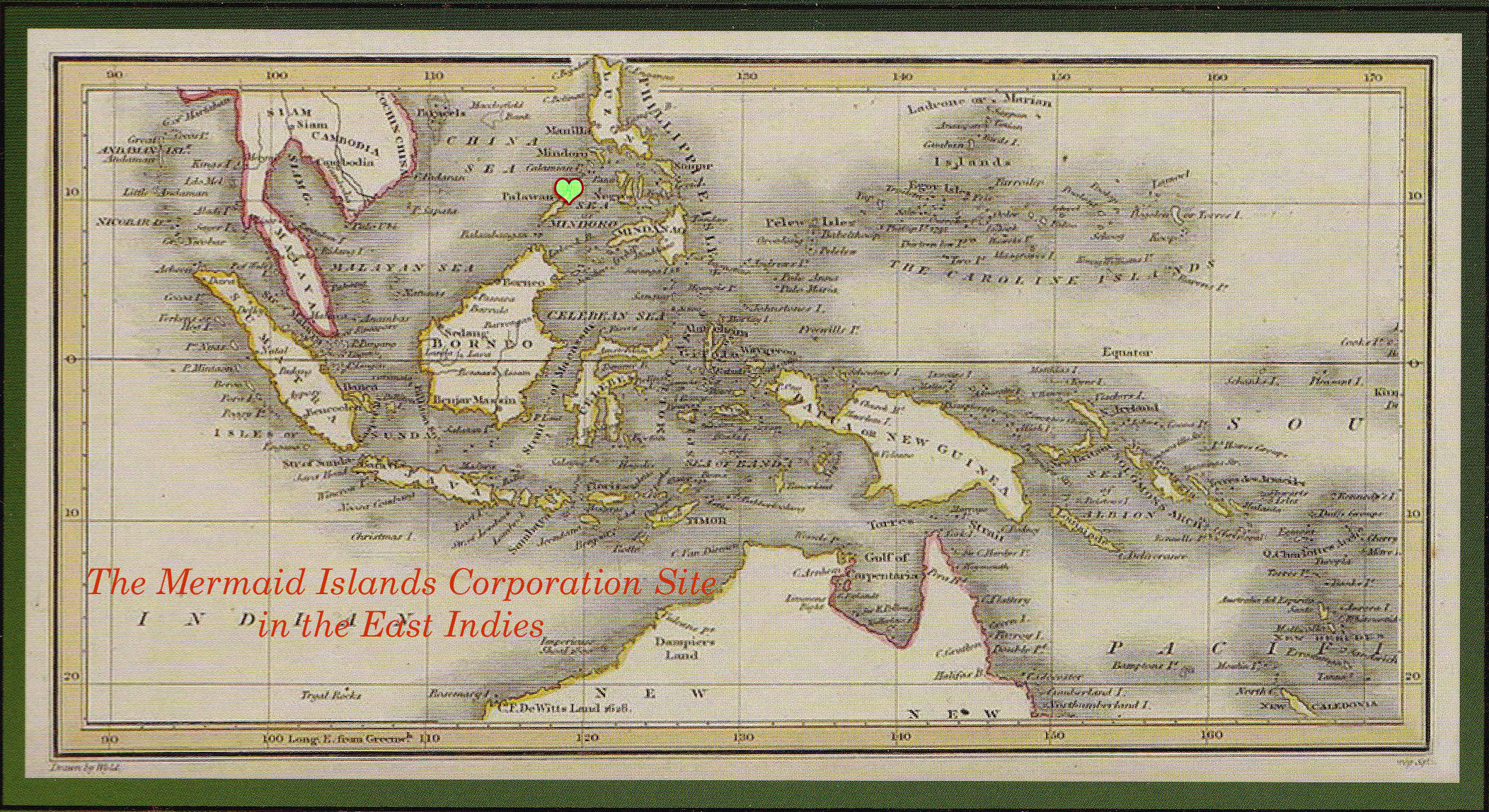
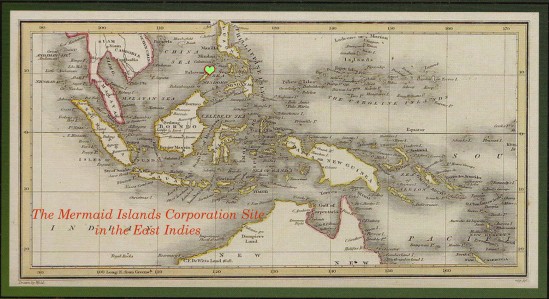
In the deep, blue Sulu Sea there is a group of beautiful, white sand islands. To get there from Australia, set your heading west of New Guinea. If you hit Bali you’ve gone too far. Go a shade north of Borneo and you will reach Busuanga Palawan, a magnificent king of the coral reef-encrusted East Indies where The Mermaid Islands Corporation took root in 2010.
These tropical islands are a mecca for modern day explorer-biologists, as they still resonate and whisper historic promises of discovery given to the likes of Alfred Wallace and Charles Darwin. This corner of the ocean is the earth’s most biodiverse marine region and is home to many treasures yet to be discovered (including island clusters undocumented by the omnipotent Google Earth). In fact, The California Academy of Sciences found more than 300 new species, including a new shark, on their short, 44-day Hearst Expedition in 2011. Discovery is a daily delight in these waters. It is an experience sure to give any naturalist tingles up and down the spine.
The Tagbanua (Tahg-Bah-Nwa) are the indigenous fishers who have always lived in harmony with the ocean and these islands. Property boundaries are only documented and verified by the memories of the elders; their ancient language, seldom written, resembles hieroglyphics, and they live day-by-day, harvesting what they need. Over the last 50 years, they have noticed a significant decline in the size and number of fish swimming in their waters. Where you could once catch 50 large Lapu Lapu in an hour, now you can catch two small Lapu Lapu in 10 hours. (Lapu Lapu aka Coral Grouper aka Cephalopholis miniata).
The Philippines is no different from other countries in that overpopulation is causing increased human impact in remote and pristine areas. In times past, these remote regions were protected by the mere fact that they were too remote and too wild to be tamed. Now, every month, thousands of immigrants from large cities like Manila and Cebu set up squatter camps. The camps lack infrastructure, like sewage, and are filled with people who are desperately hungry, all of whom traditionally eat fish. The Tagbanua are powerless against the flow of immigrants and wholly unprepared to protect their land and waters from it. What makes the effect of this local population boom so extreme isn’t just the overfishing; it is the devastating use of dynamite and cyanide to harvest fish on the near-shore coral reefs.
Coral is a shockingly resilient creature in The Philippine Islands compared to other places in the world. It bounces back from warm water bleaching events, disease, storm sedimentation, raw sewage, and the annual crush of violent typhoons. Regardless of how durable this coral has become, the two aforementioned fishing techniques, cyanide and dynamite, are its deadly opponent.
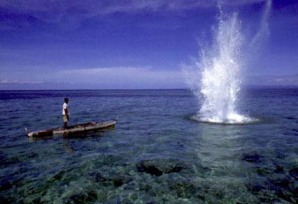
Cyanide can be purchased in a 50 lb bag of pellets and it’s very easy to use – just throw the pellets around in the water as you float over the reef. Instead of spending hours to catch one fish by hand, all the fish simply float to the surface. But, the whole reef, the foundation for fish life and human food security, is badly damaged by its use. Dynamite, or “Blast Fishing,” blows up the reef and leaves behind a crater of dead fragments. Even these tough corals can not bounce back from being blown up. These particular overfishing techniques result in less fish available to an already hungry population, which leads fishermen to take more desperate measures to feed families, leading to an even more destroyed reef and a lot less fish.
Recently, the Filipino government granted the Tagbanua the rights to their ancestral domain and they have begun to assess the growing damage to their island reefs. They value their fish stocks and want to keep them healthy, but lack expensive enforcement and knowledge of modern ecosystem-based management. My background is in the analysis of Marine Protected Areas (MPA’s) and their associated fisheries. My interests include investigating the bio-economic implications of catch, gear, permits, habitat, and time, and cornering anyone who feigns interest to enthusiastically talk about it. In 2010, I spent several weeks alone on one of these islands. This is when I met a group of Tagbanua kids and then their council of elders and I was excitedly bursting with thoughts and run-on-sentences.
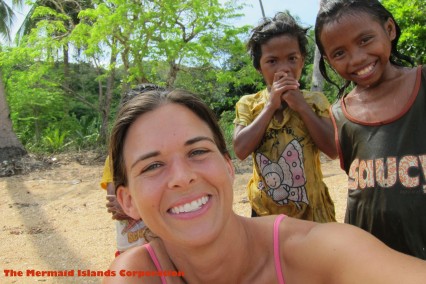
As I spent time learning about their lives and offering to share what I know about fisheries, I shocked both the children and then the elders with fun facts about the water around them; for example, that coral was alive. It was from these discussions, and the determination of Tagbanua islanders to maintain their valuable fish stock, that The Mermaid Islands Corporation was born. The Tagbanua wanted a Coral Ecology Learning Lab for Tagbanua kids, the future stewards of their ancestral waters. We at The Mermaid Islands Corporation agreed to solicit funds from investors in the area to support the project. Together, we found the perfect little island to house the Mermaid Islands Learning Lab, and the Tagbanua would protect the waters around the school’s island from destructive fishing practices. Our agreement resulted in the first Mermaid Islands Education-Based, Tagbanua-Run Marine Protected Area.
I did not expect this adventure when I came to the Philippines. My initial focus was to study and protect the gorgeous tropical reefs in The Coral Triangle but found that I needed to redefine the starting point. Being able to read a book gives you access to infinite knowledge. Knowledge is power and reading is the first step not only to self empowerment but to life long opportunities, answers and adventures. My hope is that this learning lab will eventually allow them to take advantage of the massive database of coral reef ecology and ecosystem based management that exists just beyond their fingertips. This is why the educational component of The Mermaid Islands Corporation has come to define us.
Tending Island is a small island in the protective shadow of a pearl farm. A rag tag bunch of adorable Tagbanua kids, eager to learn, had to paddle their little canoes more than eight hours to get to Tending Island. To fix this problem, we decided to house and feed the kids throughout the school week. This added incentive for the kids and surrounding families to attend. Expected attendance at orientation was 22 students but 76 kids, from ages four to 17, showed up and with uncles, aunties, and grandparents in tow. The education dinner bell had rung, and everyone was invited to stay. To compensate for the unexpected attendance numbers, we scaled down the school week from five to three days a week. The teachers would also spend the nights to help rope in the chaos. We also hired one of the grannies as a full time cook and a young couple to stay as full time caretakers on the island. The parents also helped support the initiative by supplementing our meals with fish and extra firewood over the next six months, and they often stayed to listen in on the lessons.
The staff learned a lot during the first few months. The first thing we learned was that 85% of the students were illiterate. The few who could write their names did, the rest bravely attempted to emulate them by awkwardly drawing ornate scribbles on their page. The second thing that we learned was that 98% of the students had never been to school before. When asked why, they explained that nobody could afford to get birth certificates. In order to attend a “real” school, you had to be documented.
Our curriculum quickly evolved into a basic literacy and numeracy lab, sprinkled with occasional coral ecology lectures featuring photo slideshows. By the end of the first year, everyone could write their name, do some basic math, and had birth certificates. Nine students proudly passed the basic literacy exam and were accepted at the nearest high school in Coron. And, while educating the kids in the area, the adults were taking active steps to protect the reef around the island. The biggest triumph for the Tagbanua was when the Philippines Department of Education acknowledged their efforts in education and officially became the next funder of the school. Starting in September 2012, the Department of Education is providing Tending Island with two teachers: one for kindergarten and one for first grade. I was happy to pass the torch to the professionals which allowed me to expand our initiative and refine it’s focus back to Marine Ecology.

Starting in February 2012, Mermaid Islands Corporation partnered with Unite to Light to bring solar powered reading lights to the students. (To donate a light, click here and choose, “Mermaid Project, Philippines” in the Donation Recipient dropdown list). Another project we’re working on for the kids, and my favorite one, is an alphabet book of Palawan sea creatures that we are looking to publish. The Mermaid Islands Alphabet Book is filled with facts about their island reef and supplemented with charismatic representations of fish, dugongs, and invertebrates that most people in the area simply call dinner. Let’s not underestimate the power of anthropomorphizing animals in this process to build respect and understanding for the aquatic environment.
While I didn’t set out to start an education program, that is what I ended up doing on Tending Island. This School represents a partnership among parents, students, teachers, and community leaders committed to teaching their children to read and write. This important skill will prepare students for success in high school and in life. By helping these students become literate and self empowered, Tending Island School plays a part in building a better tomorrow for the community, for Palawan and for the Philippines. The Mermaid Islands Corporation empowers kids through ocean education and basic literacy, a mission first defined by the needs and enthusiasm of this particularly impressive indigenous community.
Being a Kinship Conservation Institute Fellow, I was asked to come up with a series of questions for their Winter Newsletter in 2013. The purpose of the article is to present questions BY a Director/Founder of a Nonprofit FOR a Director/Founder of a Nonprofit for their Winter Newsletter in 2013. There is another young woman who decided to create an education based nonprofit in the 3rd world and they hoped that our interaction would be thought provoking for current fellows. Here are my answers:
Claudia’s Answers:
5. The most challenging thing I ate (on many occasions) was a breakfast of Dried reef fishes with a handful of pebble flecked rice. It never got easier and was often the remnants of the previous nights dinner. This SUPER fishy dish harbors a violently pungent taste achieved only by the equally popular fermented shrimp paste and sour green mango. No refrigeration needed. Split your reef fish and lay it on the beach in the tropical sun. After 3 or so days of being COVERED in flies, it will have ripened perfectly into a hard as tack fish mummy. Remove from sun and put on table (if you have one). During grace, pray for the possibility that saltiness may have killed any bacteria, fly babies or brain parasites. Be mindful of your teeth while eating. It’s always good to hang onto the good ones and chances are high you don’t have many if you eat this regularly. Be polite to your hosts. Notice how thin everyone is, recognize this is an important source of protein and appreciate the significance of this generous gesture to share. This dish is sure to shock the imagination and mild pallet of Americans and Europeans alike. Also a great way to lose weight
6. The East Indies gives one a feeling of the Wild Wild West. The amount of weapons that people carry always shocked me. In the rural areas everyone carries a machete. At our little school during recess, even the four year olds would have their machetes and use them in their games. Like in all school yards they have different and ever changing versions of tag and hide & seek. Not having any school issued rubber balls is not a barrier to fun here. The kids could quickly and casually use their machete to cut, strip and weave a small bamboo cube. This could then be thrown at other kids to get them in or out or frozen.
7. The control and power of deciding the direction and outcomes of projects that I care about. It is both scary and awesome to have the ability to make something succeed.
8. My advise would be don’t forget to pay yourself. My first rookie mistake was solely concentrating on the project and forgetting that a salary should be included in the cost equation. It is OK to be paid for running a nonprofit.
The WordPress.com stats helper monkeys prepared a 2012 annual report for this blog.

Here’s an excerpt:
The new Boeing 787 Dreamliner can carry about 250 passengers. This blog was viewed about 1,300 times in 2012. If it were a Dreamliner, it would take about 5 trips to carry that many people.

The Mermaid Islands Corporation is a 501(c)3 Corporation dedicated to empowering kids through education and educating kids about the ocean and it’s critters.
If you would like to support The Mermaid Islands in it’s mission, donations can be made in any amount via check or PayPal. Click the button below for PayPal.

Donations can also be made by check addressed to “The Mermaid Islands Corporation”
Please send checks via mail to the following address:
The Mermaid Islands Corporation
PO Box 12103
San Luis Obispo, CA 93406
Mermaid Scientist has a FaceBook Fan Page. To make your reading even easier, will put a little post on FaceBook when there is an update.
http://www.facebook.com/pages/Mermaid-Scientist/356434361056788


Mermaid Islands is partaking in SciFund Challenge Round #2, the largest Science Crowdfunding project on the internet, has launched its second round at http://scifund.rockethub.com. The goal behind #SciFund is to give scientists an incentive to get out there and begin to couple outreach to the earliest stages of their research programs. Participants create videos about their research, and encourage them to create rewards for donations that involve the general public with their work on into the future.
I wanted to share this with all of you coral reef enthusiasts and scholars because I found this to be an interesting new way for student and professional scientist to engage the public, get the word out on their fantastic research, and even fund parts of their project. (And one of the projects is mine).
http://www.rockethub.com/projects/7533-how-to-use-education-to-protect-a-coral-reef
Introducing my supertastic nonprofit:
The Mermaid Islands Corporation works to educate children and fisher folk in the third world islands of the Coral Triangle on the benefits of local reef protection. The Coral Triangle is the center for marine biodiversity in the world and encompasses The Philippine Islands, Indonesia, New Guinea and the Solomon Islands. The Philippines are a hot spot within The Coral Triangle, meaning that due to ocean currents, there are more documented fish, corals, plants and invertebrates in this small piece of ocean than any other place on the entire planet. This biologically special place is threatened daily by the common third world problems of overpopulation, ignorance and hunger. The Mermaid Islands Corporation provides resources for learning labs that illustrate solutions to these problems. The Mermaid Islands Corporation is working to alleviate future pressure of destructive fishing practices (such as dynamite and cyanide) through education, understanding and reef protection.

check us out at:
& see more fun pictures on FaceBook
 Mermaid Scientist