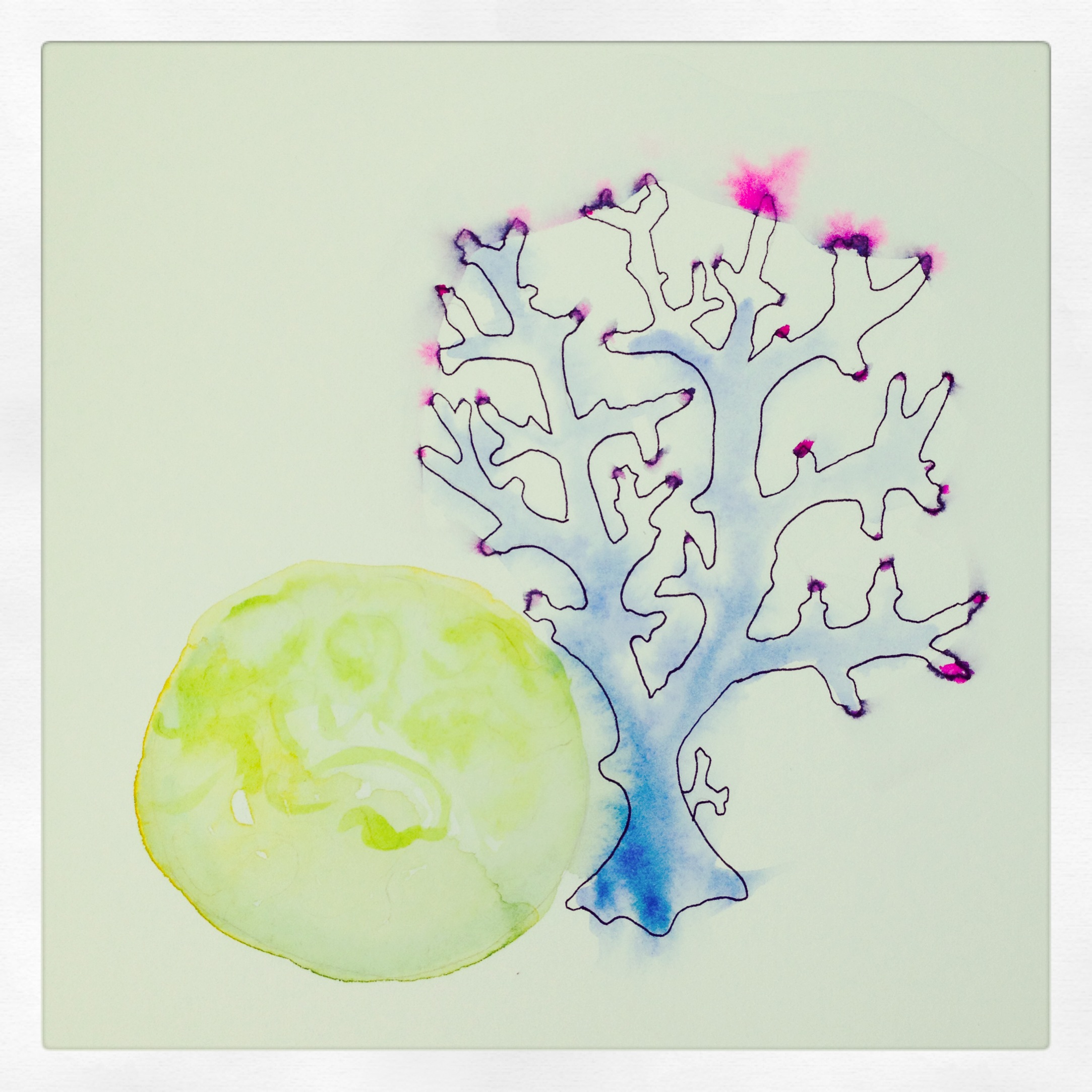
Blue Acropora and Brain
How To Be A Mermaid/Marine Biologist
paintings and drawings
Artist Interview for Art After Dark by Highlight Media (from the last show)
https://www.youtube.com/watch?v=MEi_w3MPdJc

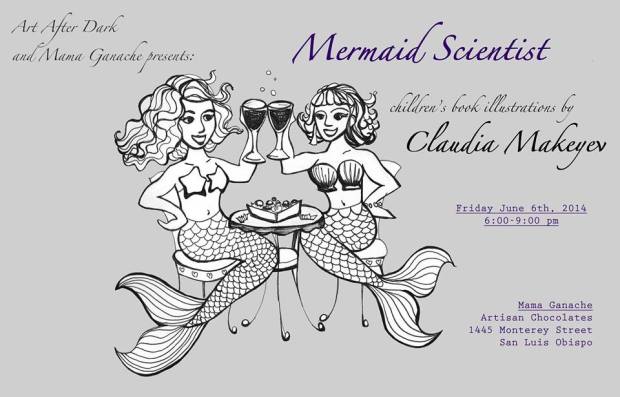
Come join us for a night of art, wine and chocolate!
There will be juice for the younger mermaids
Friday June 6th, 2014
Mama Ganache Artisan Chocolates
1445 Monterey Street,
San Luis Obispo
RSVP at our Face Book Event Page:
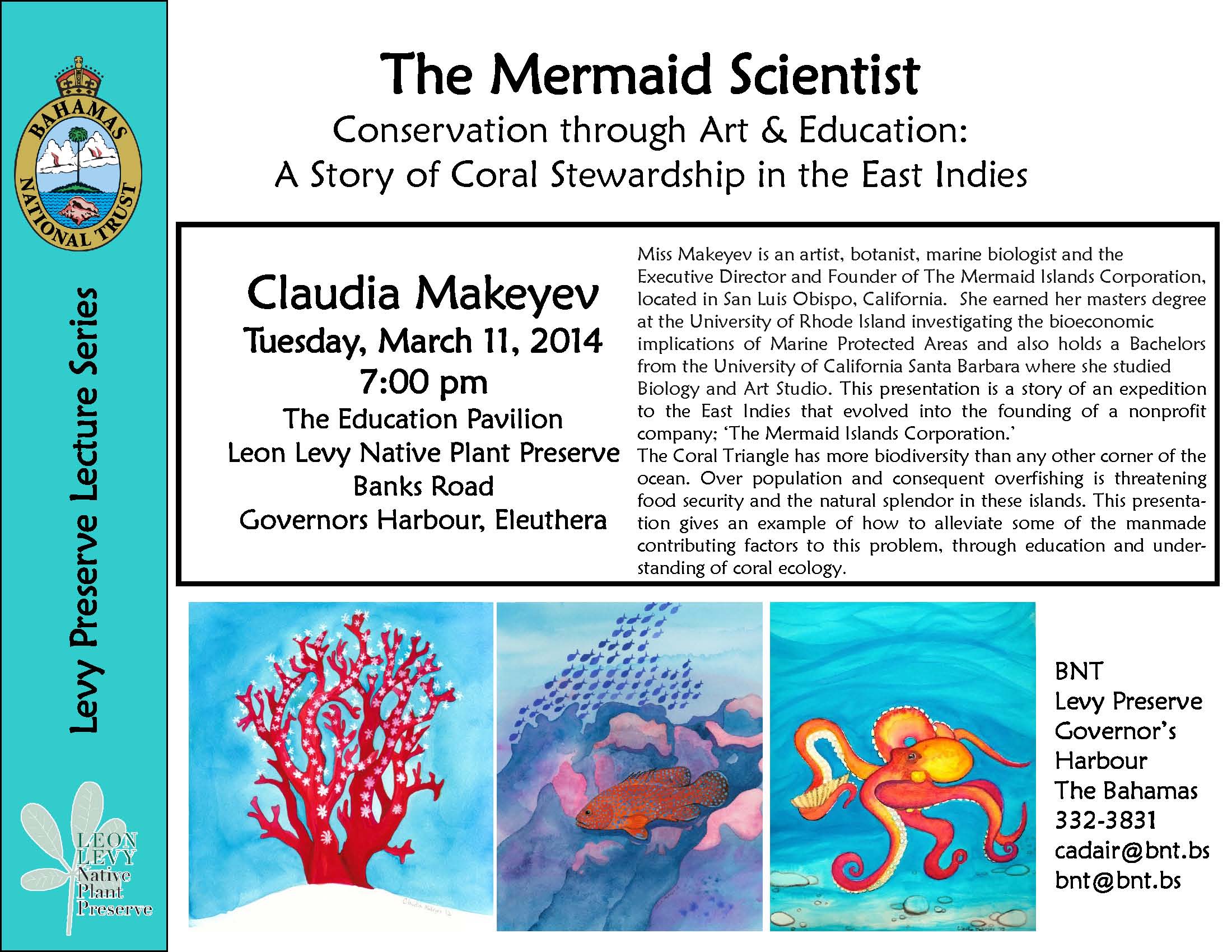
All are welcome!
The Mermaid Scientist Show at Art After Dark was a success!
Watch reporter Jason Reed from Highlight Media interview the artist here:
http://www.youtube.com/watch?v=MEi_w3MPdJc
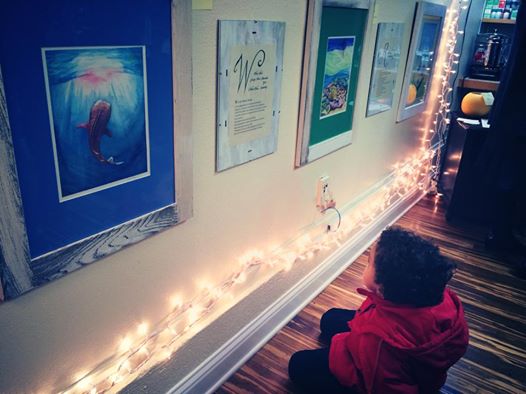
the butter cream sea creature cupcakes were a hit with the little mermaids in training
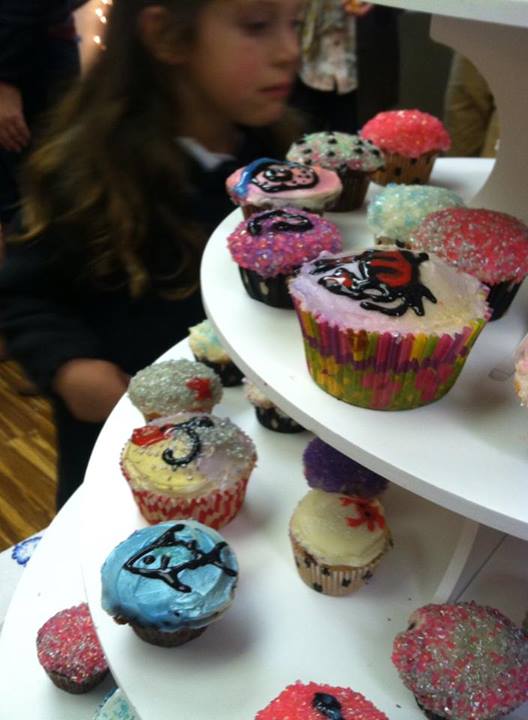
Thank you to Green Goods for their help in hand crafting
the beautiful frames out of reclaimed red wood and sustainably grown bamboo.
Thank you to all my friends and family for coming to the show



Art After Dark in a monthly Art Show Event in San Luis Obispo
Illustrations from The Mermaid Scientist Alphabet Book will be showcased at Anaya Acupuncture
Address: 1264 Higuera Street Suite 102D
(Next to Vintage Wine Bar on Monterey Street & Johnson Ave)
Come peruse some fish art and enjoy!

R is for Reef Realestate
Native Name: Bahura
The Reef is an underwater ocean city
Made of the colors & creatures also found in the depths of your imagination.
Brilliant blue angels & purple porcupines
Tangerine sponges & lemon sharks
Dolphin queens & dugong kings
Creepy crawlers, poisonous spines, silky pearls & polka dots
of every shape and size.
Some eat plants, some eat each other.
Forever living, forever breathing, watching, building, swimming and eating.
They dance, enchant and take your breath away.
Forever & ever & ever
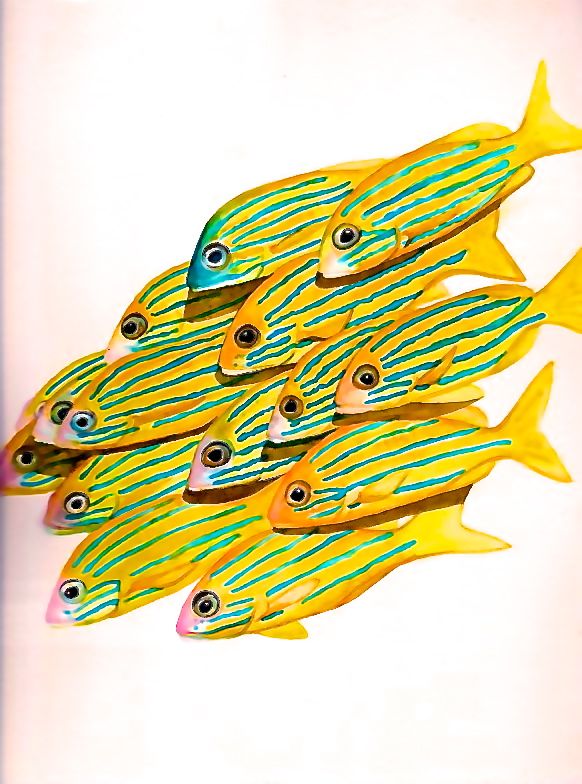
Q is for Quinque
Scientific Name: Quinquelineatus
Common Name: Five-lined snapper
Tagalog: Maya maya
A lot can be found in a name.
This is a school of Five Lined Snapper aka Lutjanus quinqueliniatus
We enjoy swimming and eating together over the coral reef.
Quinque means five.
Qunique is an important part of our scientific name.
It describes who we are and what we look like.
We have five of something, can you figure out what?
Hint: it’s long and blue.

P is for Purple Parrotfish Poop
Scientific Name: Scarus niger
Palawan: Mol Mol, Tagalog: Loro Loro
These Parrotfish are one of many contributors to the beautiful tropical white sand beaches in The Coral Triangle. They are particularly fond of eating the algae film that grows on coral. They chomp into the coral with their beak (actually fused teeth) to get a mouthful of both coral and algae. The crushed coral helps the fish digest the algae and is then pooped out in the form of particularly perfect, soft, white sand. Next time you are relaxing on your tropical vacation, remember to thank the parrotfish.
Side Note: These particularly pretty purple parrotfish look most like the male Swarthy Parrotfish – Scarus niger. The ones observed here have slightly different spot patterns behind the eyes but it could be a local variation or due to a shift between initial and terminal phases. This is the way I saw them so this is the way I paint them. There is also that glorious possibility that they are a new species, sigh, the scientific holy grail.
 pen ketch of Female (above) and Male (below)

O is for Octopus
Scientific name: Amphioctopus marginatus
Tagalog: Pugita
The Coconut Octopus of The Coral Triangle is a multi-talented mollusk. He can change color to tell you how he’s feeling, solve puzzles, catch fish, blow ink, swim, crawl, explore, befriend mermaids
AND, most impressively, he joins the elite group of species on planet earth who use tools. His favorites include coconuts and clam shells and uses them for protection. Like the nudibranch, he is a soft and squishy little guy who feels exposed and naked when walking across the ocean floor. A clam shell acts like an army helmet or bunker, making a safe place to hide when a hungry sea monster attacks.
Video: http://bcove.me/u67wa3sj
 N is for Nematocyst Nipping Nudibranchs
Scientifice name: Chromodoris elizabethina (left) & Chromodoris annulata
Tagalog: Dugo Dugo
“Nudis” are a brightly beautiful group of sea snails without shells. When you are a tiny, squishy sea creature with out a shell, you can feel a little nude and unprotected. Anemones don’t have shells either but they do have stingers. Nudis have a special way to collect anemone stingers (aka nematocyts).
First they go up to the anemone and touch it to make sure it is really an anemone. Then they retreat back to a safe distance. Next, they charge back to the anemone and start munching on the dangerous tentacles, they swallow the stingers and absorb their power. Soon the little Nudi is able to sting like an anemone. This is why Nudibranchs eat the poisonous stingers off of anemone tentacles. Stingers are not just delicious treat for these brilliant little sea slugs.
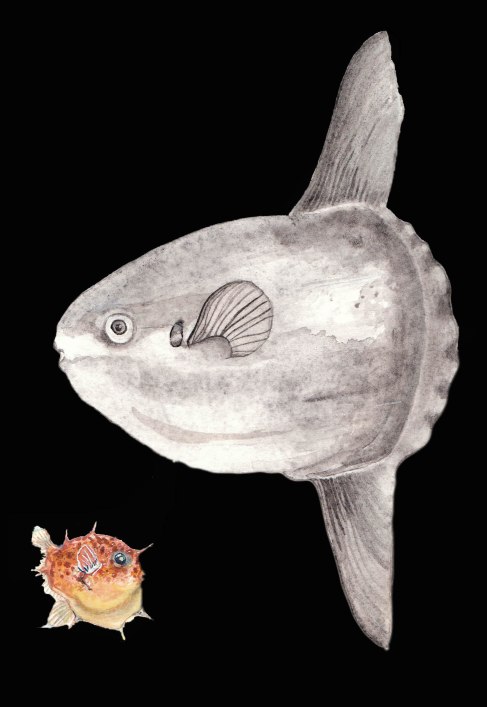
M is for Mola Mola
Scientific Name: Mola mola
The Mola Mola is also known as The Sunfish because she likes to bask in the sun. She dives into the cold dark depths of the ocean to fill up her belly with jellyfish. When the cool deep waters chill her bones, she swims all the way back up, up, up to the surface, lies on her side and soaks up the warm sun rays. Sometimes a sea bird will drop down and pick off all the little hitchhiking bugs on her tail. Because they are so slow and docile, they are the most highly parasitized fish in the ocean (Disgustingly long tape worms are a common hitchhiker).
The little orange fish on the left is a baby picture, from when she was a teeny tiny microscopic mola mola floating in the plankton as she grew and grew. Molas are the largest teleosts and grow from 10 microns to over 10 feet wide.

K is for Krill
Scientific name: Euphausia fallax
Tagalog: Alamang
A Krill is different than a shrimp and different than a prawn.
Krill are Krill.
They are open ocean travelers and the size of a jellybean
They munch of delicious green diatoms.
Their sheer numbers are a super force that
create a floating cloud with the power to turn the immense blue ocean a radical shade of pink.
Everyone in the sea depends on these tiny pink crustaceans to keep things running smoothly.
The power of one pales with the power of a billion trillions!
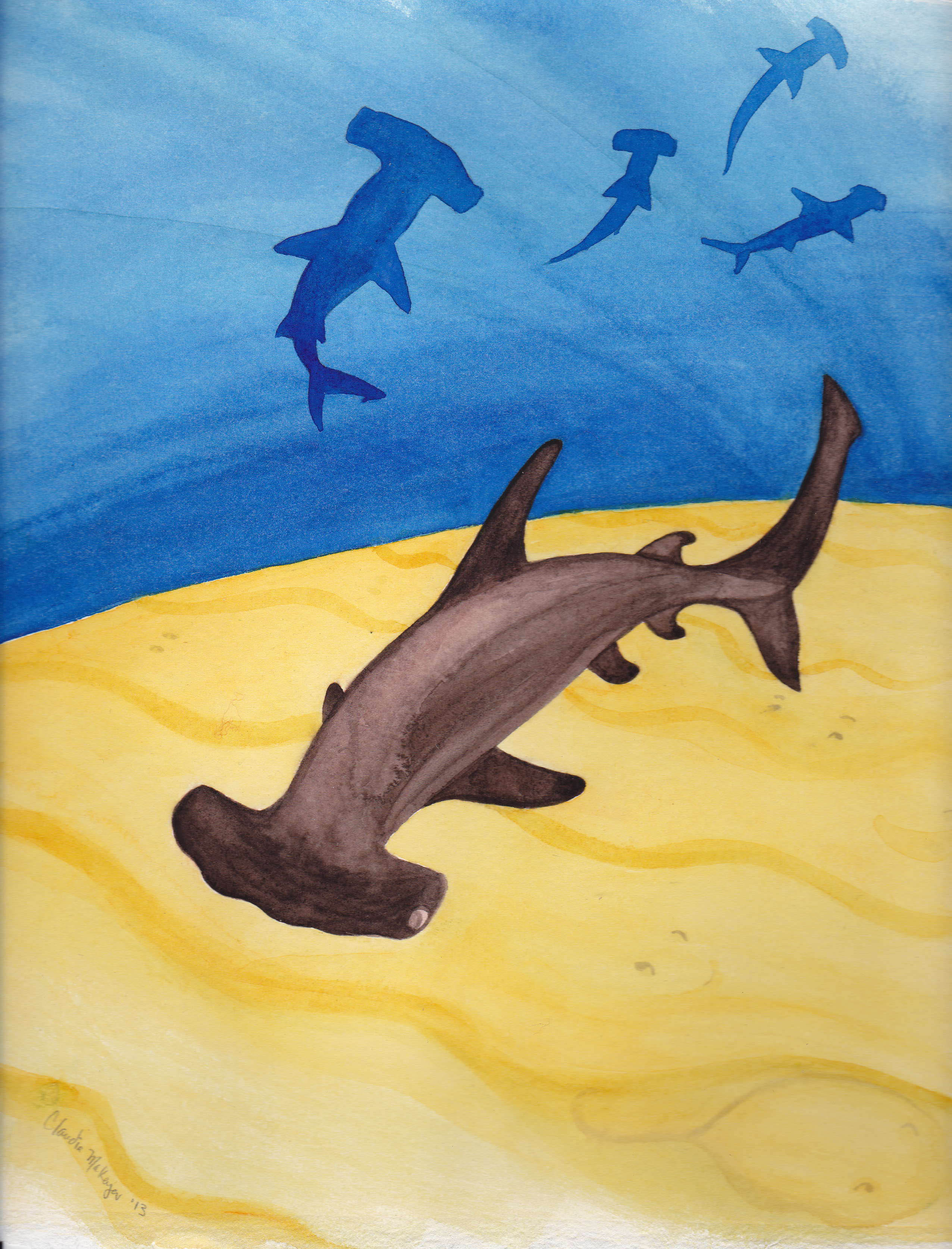
H is for Hammerheaded Hammerhead Head Shark
Tagalog: Crosan
Scientific Name: Sphyrna lewini
This shark has a humungous hammer shaped head.
A Hammerhead can find his favorite foods hidden under the sand, like the stingray.
His head has pores filled with electric jelly that can sense other animals even when they are hidden.
You can also call these jelly pores “electroreceptors” or “galvanic cells”
The bigger the head, the more pores and therefore it’s easier for this shark to detect electric impulses from other sea creatures.
Finding invisible things is this sharks special power so playing hide and seek with him is not recommended.
 Mermaid Scientist