There have been a lot of inquiries about the first Mermaid Scientist book coming out in time for the holidays. I myself was extremely excited too. This was to be the easiest Christmas shopping year of my life. One item for everyone! Done! Happy Holidays! Love Me. But the tide is switching and temporarily floating Mermaid Scientist away into the world of real world publishers. I am bursting with happiness to report this, don’t get me wrong! But I am choking on the enthusiastic lump in my throat as I report that Mermaid Scientist is not aloud out into the world quite yet. Soon to be sure, just not in time for Christmas 2014. I will keep you updated as things progress and be tragically relegated to gifting of socks, calendars and fruitcakes this year. 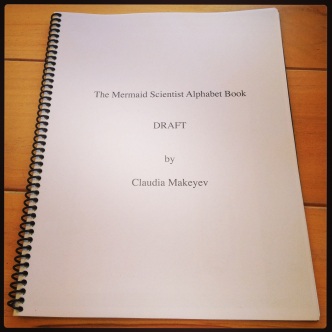
Tag Archives: mermaid scientist
Dolphin Tails and Mantees
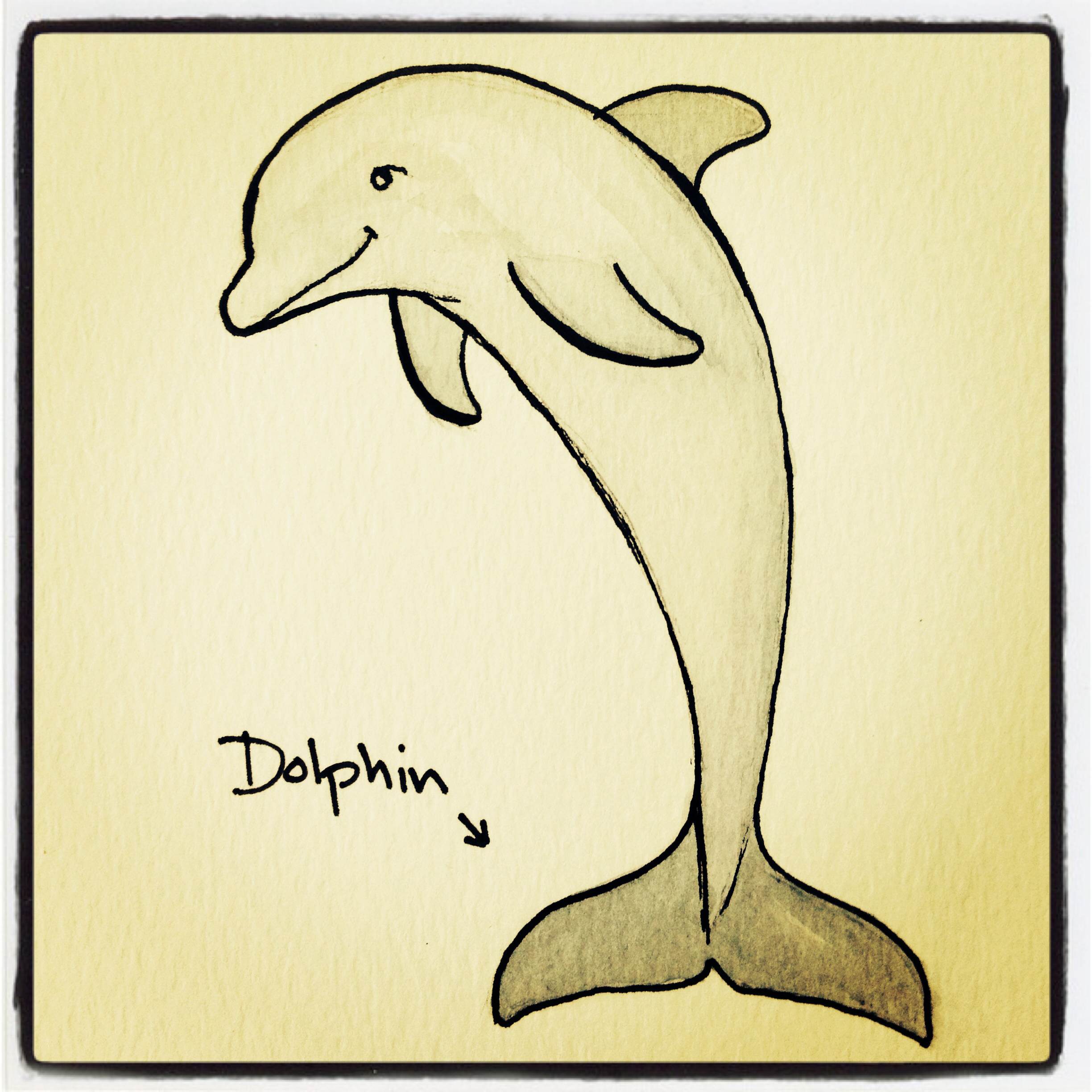
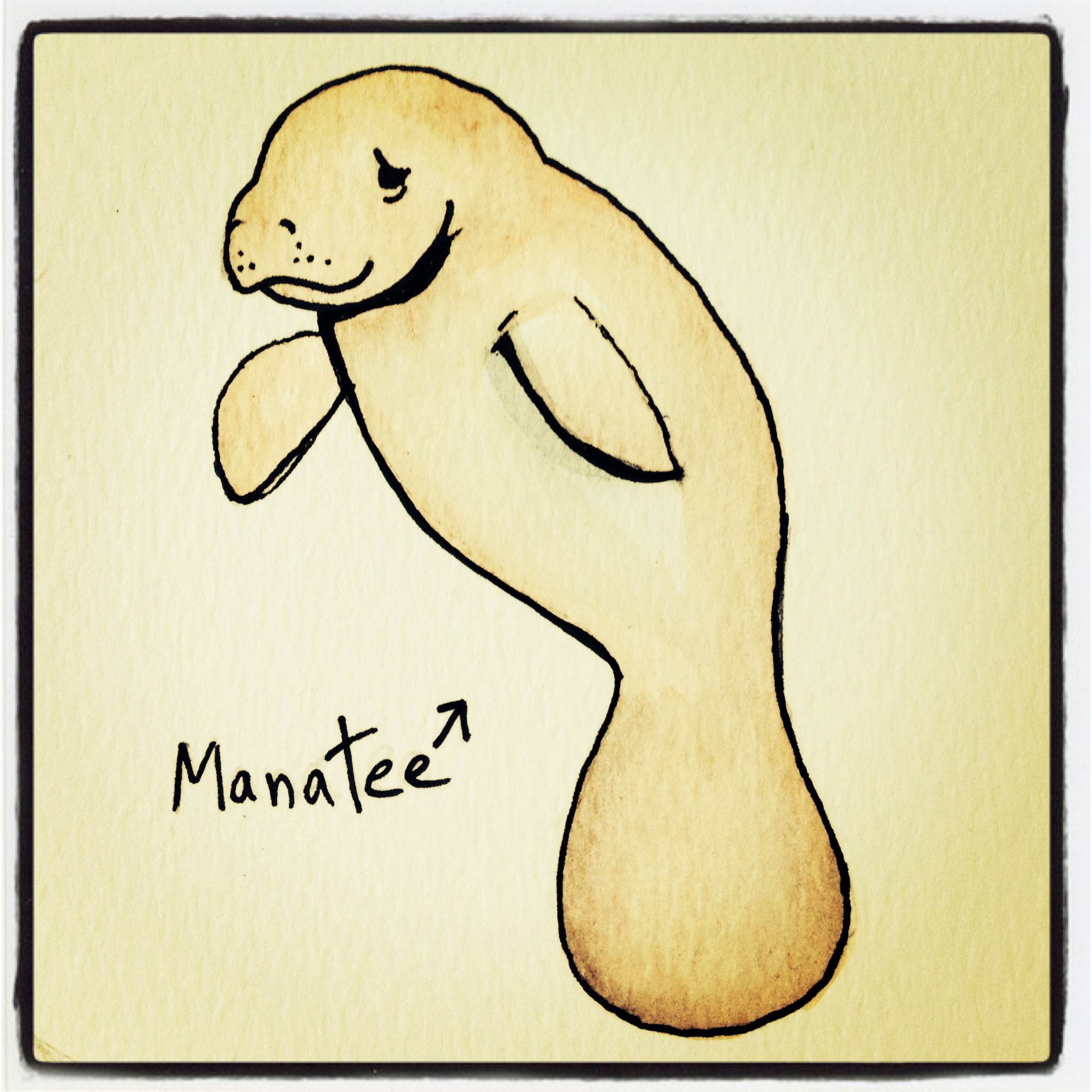
ABC Book Formatting
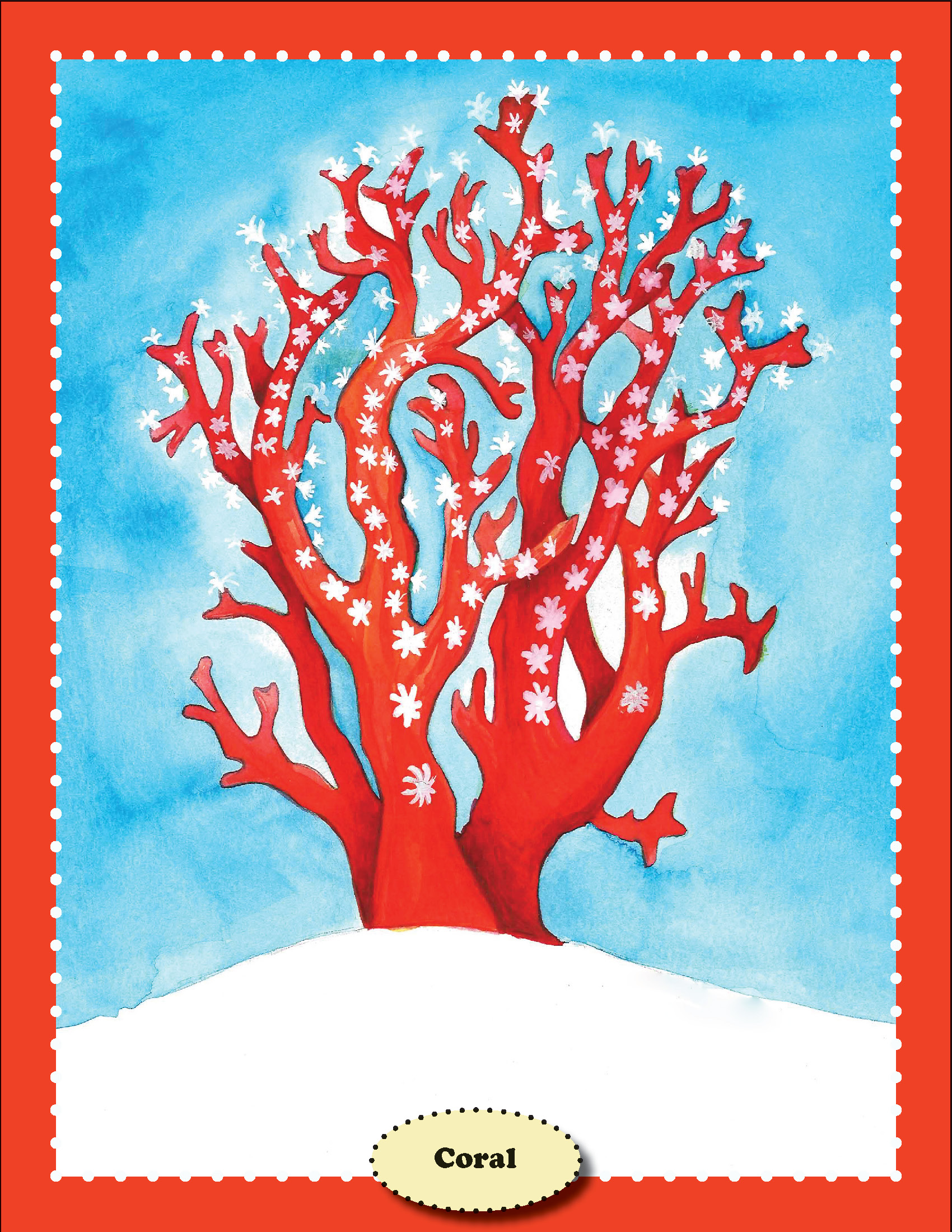
Formatting the pages of The Mermaid Scientist Alphabet Book. My first book is coming together! We are almost there!
InDesign and Photoshop and I have had our ups and downs.
We are slowly working out our many issues with the help of digital relationship therapists, YouTube & Adobe Help.
Coral and Chromis watercolor
Coral Doodles
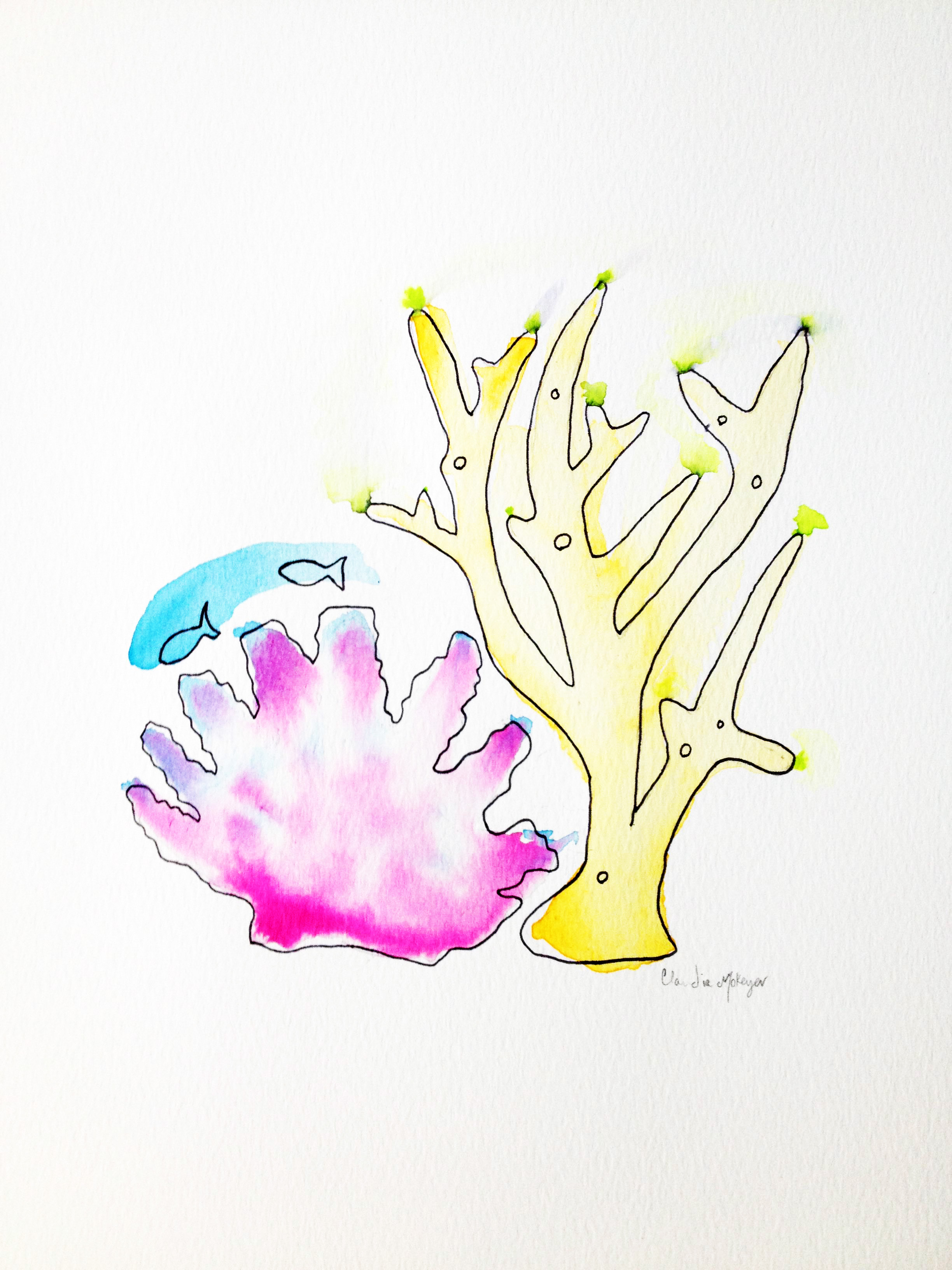
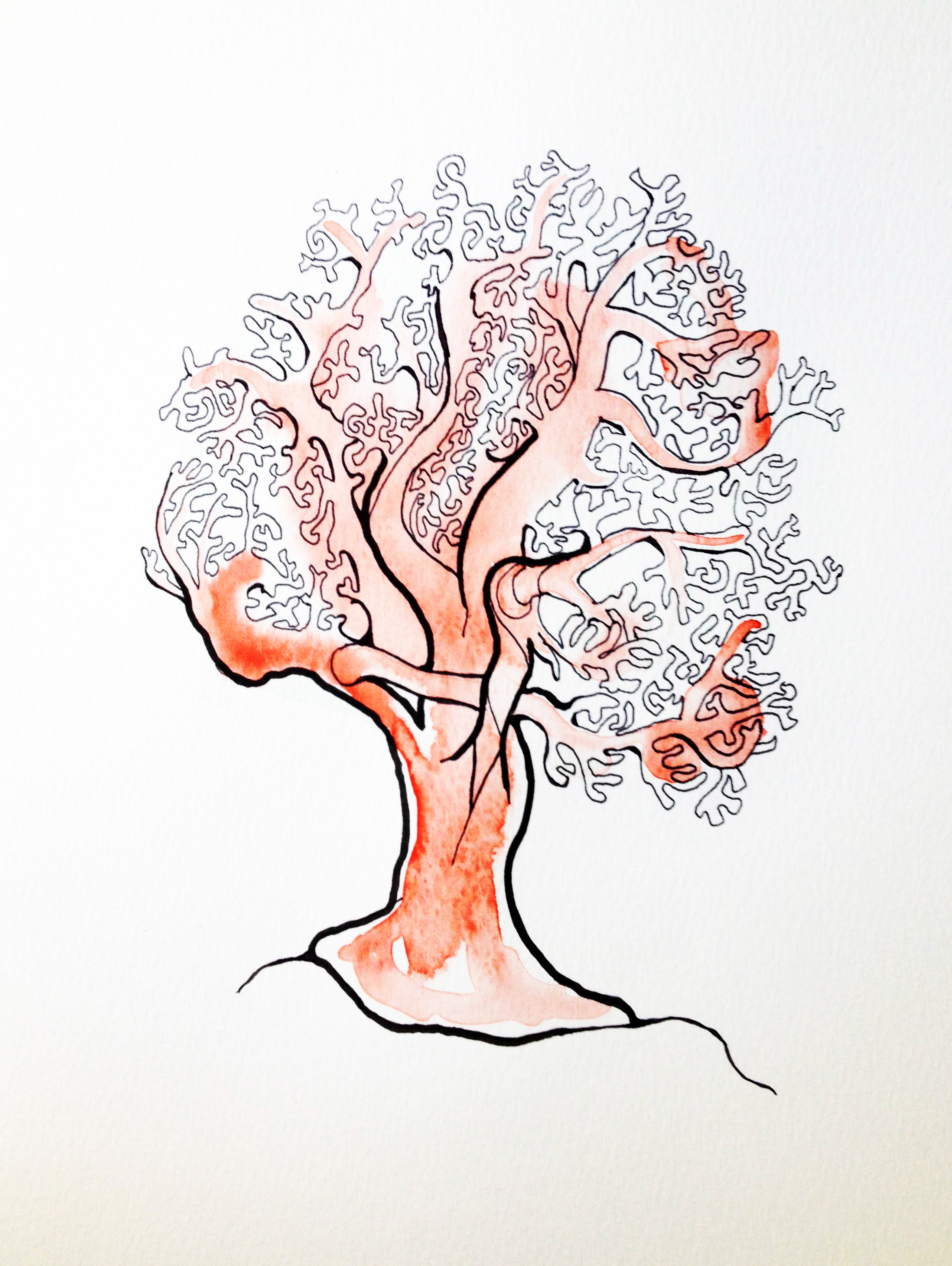
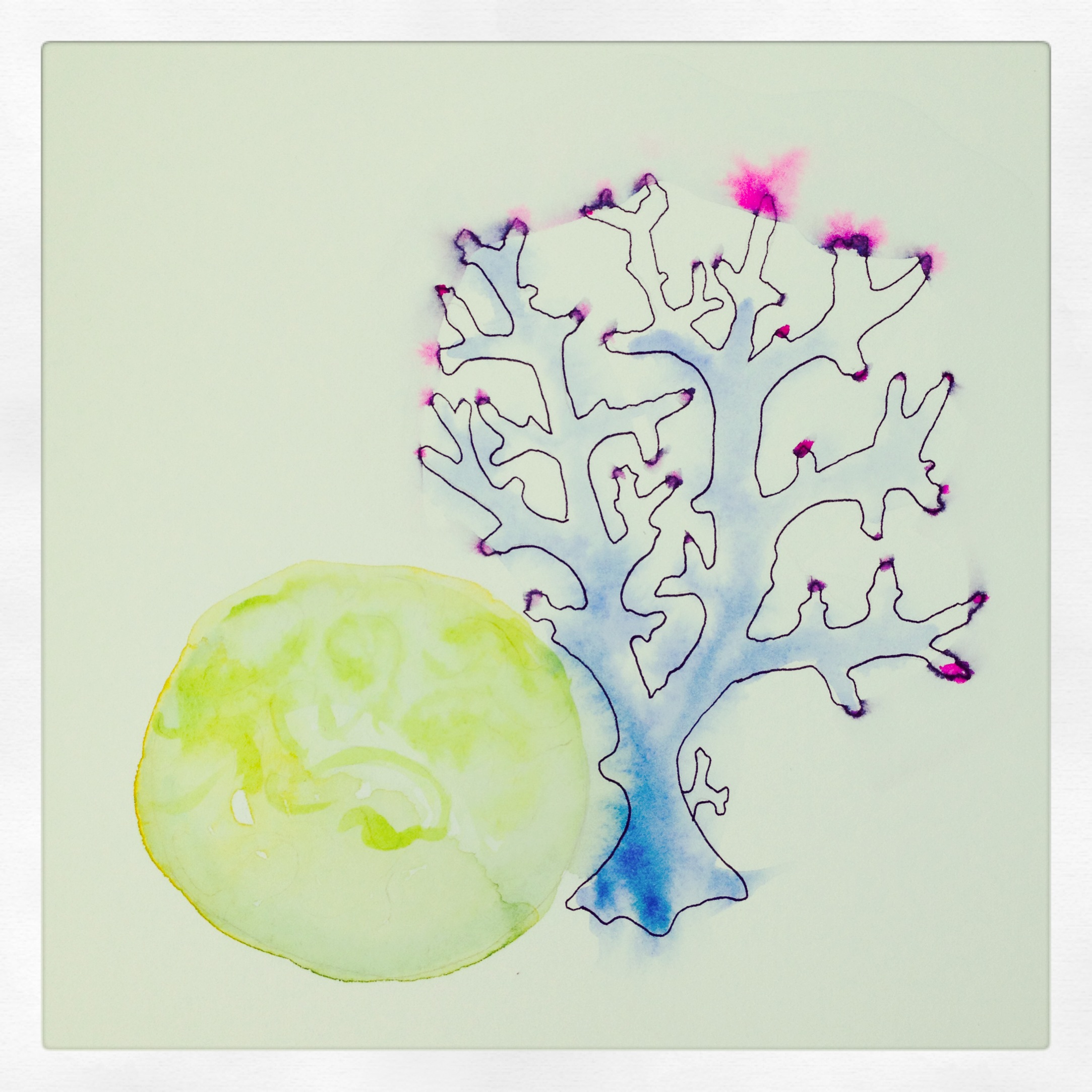
Original watercolors are for sale at Mama Ganache Chocolate Shop in downtown San Luis Obispo, California
Thank You
Thank you to everyone for coming out to enjoy some art and wine and chocolate!
I feel grateful to have such classy fantastic friends and family!
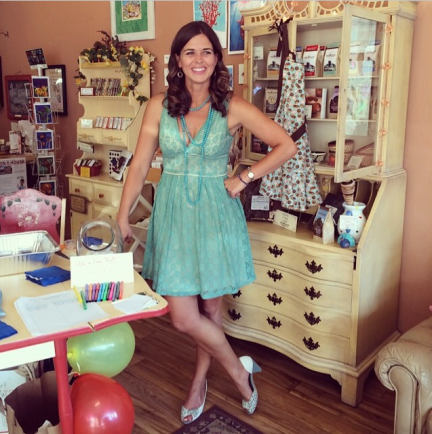
All the Mermaid Scientist art, prints and cards will be on display & for sale June and July at Mama Ganache Artisan Chocolate.

Schedule for June and July Art After Dark

The Mermaid Scientist Art Show
The Mermaid Scientist Show at Art After Dark was a success!
Watch reporter Jason Reed from Highlight Media interview the artist here:
http://www.youtube.com/watch?v=MEi_w3MPdJc
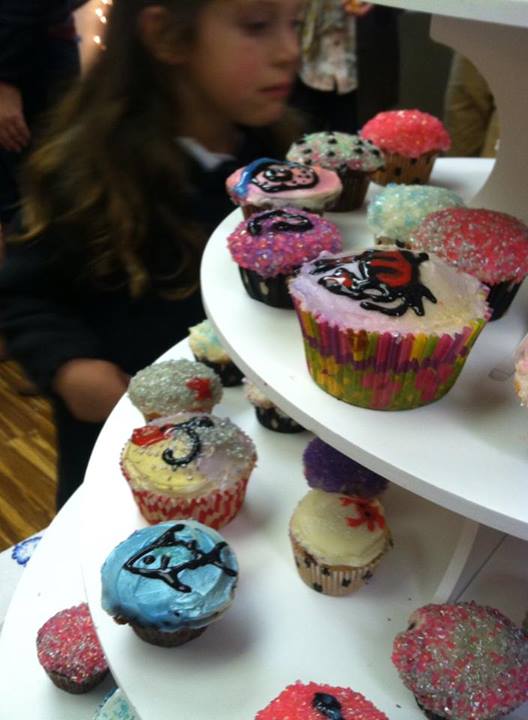
the butter cream sea creature cupcakes were a hit with the little mermaids in training
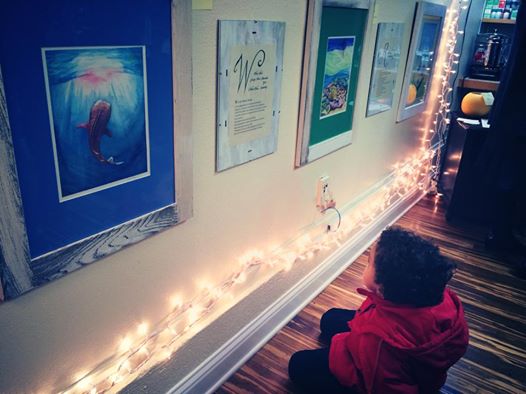
Thank you to Green Goods for their help in hand crafting
the beautiful frames out of reclaimed red wood and sustainably grown bamboo.
Thank you to all my friends and family for coming to the show


Mermaid Scientist in Chalk
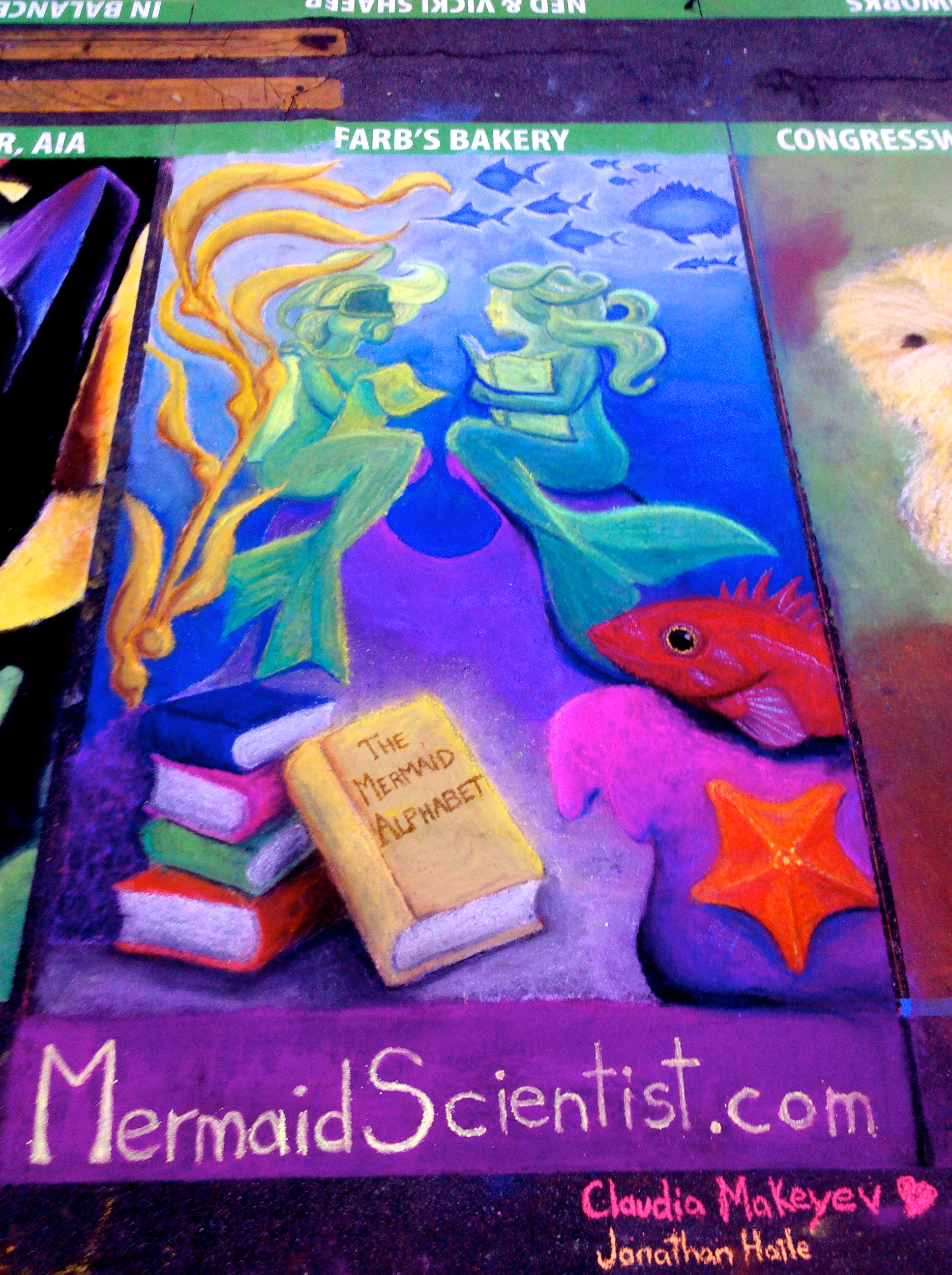
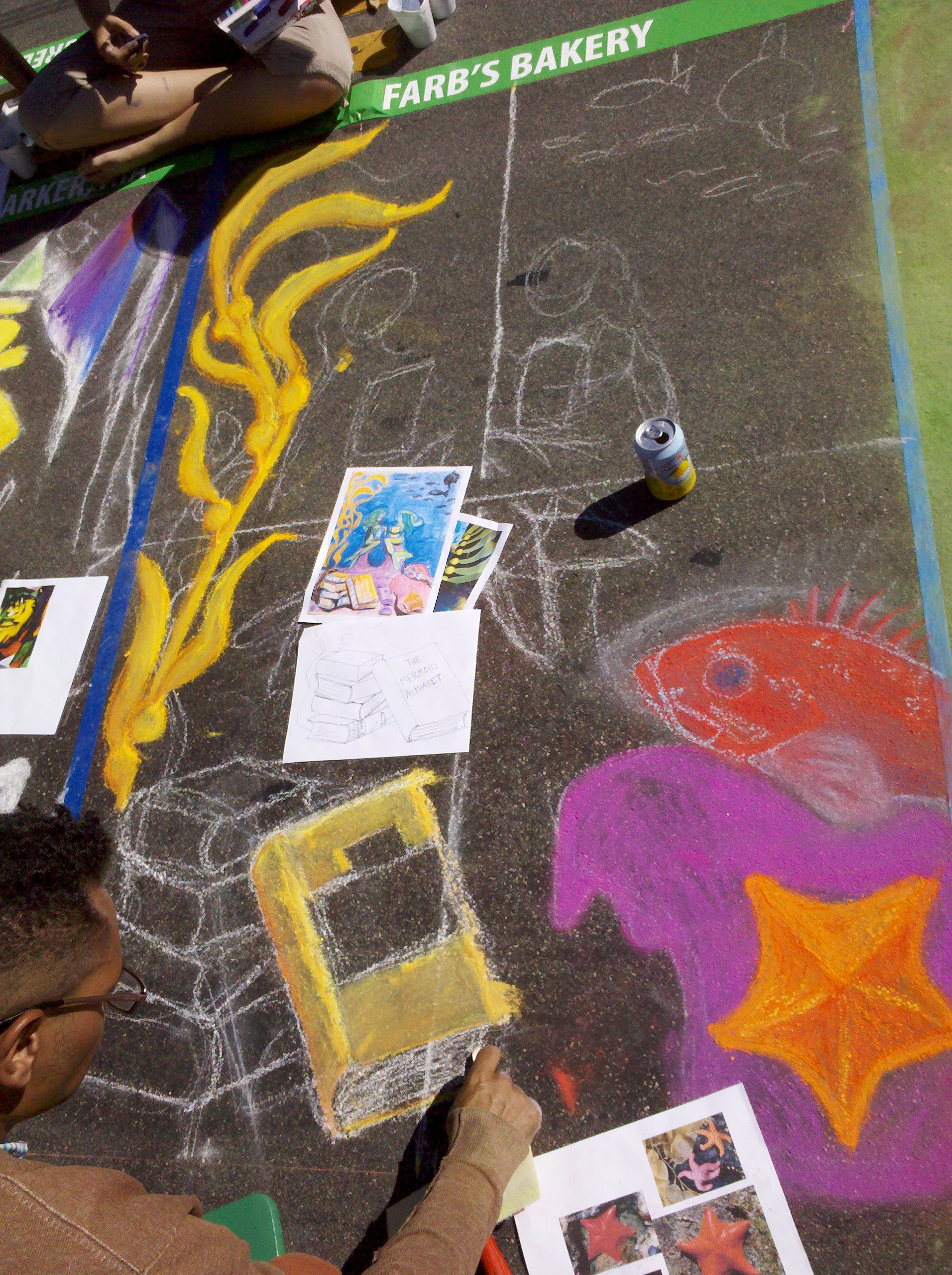
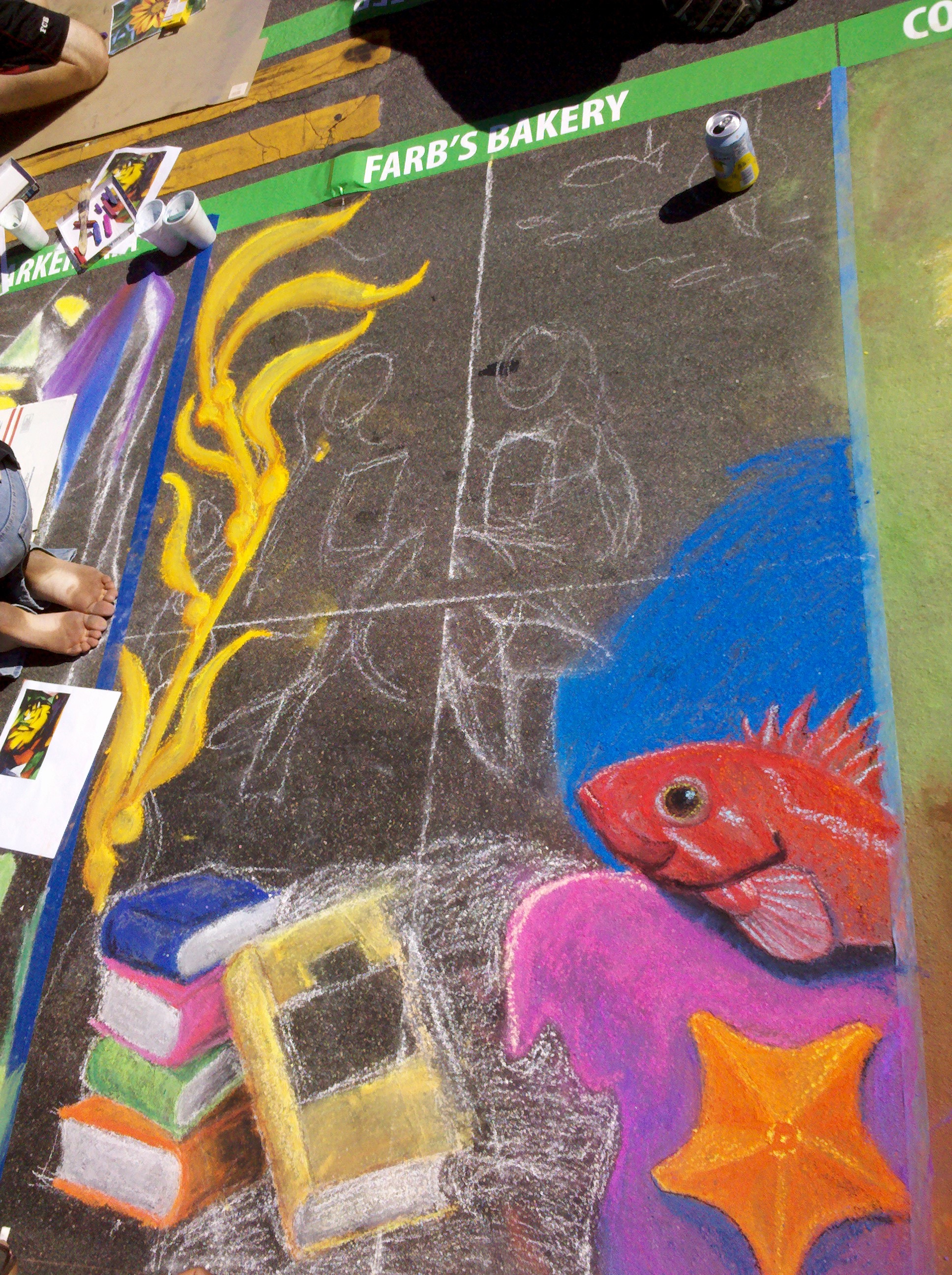
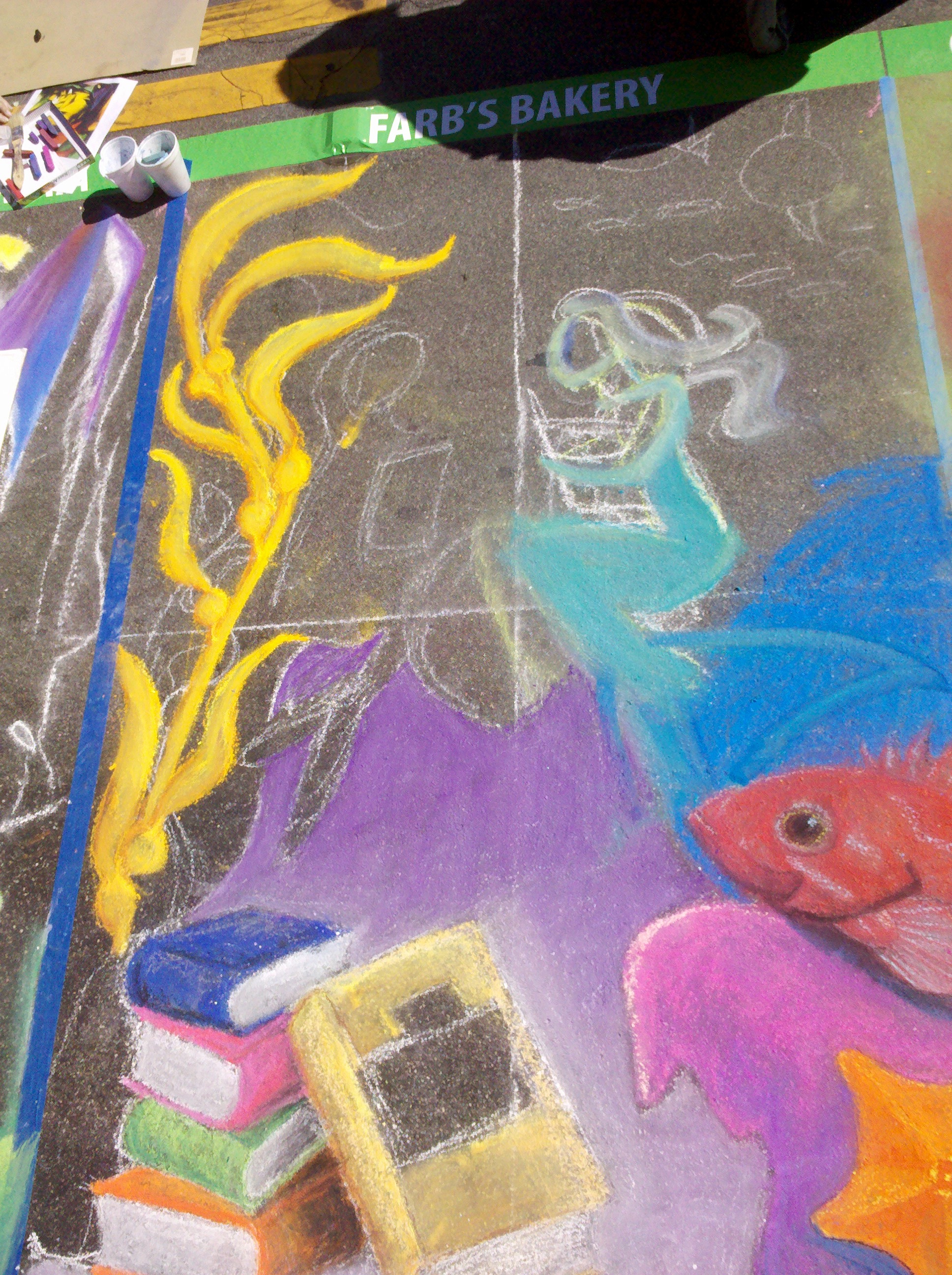
Mermaid Scientist at the San Luis Obispo Mission de Tolosa 2013 I’Madonnari. Artists Claudia Makeyev and Jonathan Haile sketched, spritzed and smeared bright colors into pavement under a HOT September sun. This work was sponsored by the delicious local favorite Farb’s Bakery. Proceeds went to The Children’s Creative Project, which enhances the arts education programs in the San Luis Obispo County schools and the American Institute of Architects (AIA) Central Coast Chapter.
Q is for Quinque
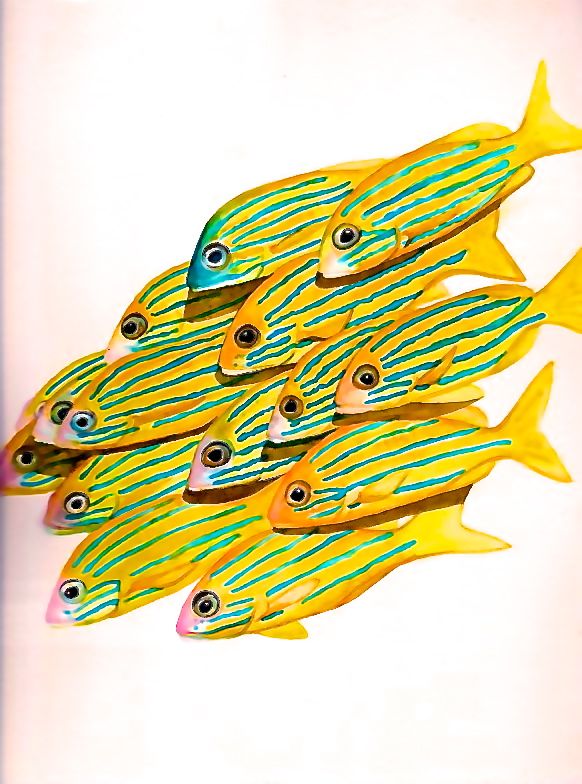
Q is for Quinque
Scientific Name: Quinquelineatus
Common Name: Five-lined snapper
Tagalog: Maya maya
A lot can be found in a name.
This is a school of Five Lined Snapper aka Lutjanus quinqueliniatus
We enjoy swimming and eating together over the coral reef.
Quinque means five.
Qunique is an important part of our scientific name.
It describes who we are and what we look like.
We have five of something, can you figure out what?
Hint: it’s long and blue.
P is for Purple Parrotfish Poop

P is for Purple Parrotfish Poop
Scientific Name: Scarus niger
Palawan: Mol Mol, Tagalog: Loro Loro
These Parrotfish are one of many contributors to the beautiful tropical white sand beaches in The Coral Triangle. They are particularly fond of eating the algae film that grows on coral. They chomp into the coral with their beak (actually fused teeth) to get a mouthful of both coral and algae. The crushed coral helps the fish digest the algae and is then pooped out in the form of particularly perfect, soft, white sand. Next time you are relaxing on your tropical vacation, remember to thank the parrotfish.
Side Note: These particularly pretty purple parrotfish look most like the male Swarthy Parrotfish – Scarus niger. The ones observed here have slightly different spot patterns behind the eyes but it could be a local variation or due to a shift between initial and terminal phases. This is the way I saw them so this is the way I paint them. There is also that glorious possibility that they are a new species, sigh, the scientific holy grail.
 pen ketch of Female (above) and Male (below)
N is for Nudibranch
 N is for Nematocyst Nipping Nudibranchs
Scientifice name: Chromodoris elizabethina (left) & Chromodoris annulata
Tagalog: Dugo Dugo
“Nudis” are a brightly beautiful group of sea snails without shells. When you are a tiny, squishy sea creature with out a shell, you can feel a little nude and unprotected. Anemones don’t have shells either but they do have stingers. Nudis have a special way to collect anemone stingers (aka nematocyts).
First they go up to the anemone and touch it to make sure it is really an anemone. Then they retreat back to a safe distance. Next, they charge back to the anemone and start munching on the dangerous tentacles, they swallow the stingers and absorb their power. Soon the little Nudi is able to sting like an anemone. This is why Nudibranchs eat the poisonous stingers off of anemone tentacles. Stingers are not just delicious treat for these brilliant little sea slugs.
J is for Jellyfish loving Juvenile Jack

J is for Jellyfish loving Juvenile Jack
Scientific name: Gnathanodon speciosus
Tagalog: Leson & Labong Labong
Juvenile Jacks love Giant Jellyfish.
They have tough skin so the jellyfish tentacles only sting a little bit.
Having jellyfish protection when a big fish wants to eat you is worth a little sting.
This bright yellow jack is also known as Golden Trevally and like most trevally, they get HUGE.
Jacks are truly a « Jack of all trades ». Jacks patrol their reef, but they can also compete in the open ocean or expore sandy shallows or swim around the mangroves.
They are large and in charge predators and even boss around the reef sharks.
At least they are once they grow up, and to do that they have to survive with tricks like swimming with jellyfish.
I is for Ichthyologist
 I is for Ichthyologist
ICK-THEEE-O-LOW-GEST – Ichthyologist!
This is a name for a person often found in the water. They are scientists who study fish, count fish, dream about fish and collect data to unlock the secret lives of fishes.
Ocean enthusiastic kids have inquired on how to become a mermaid. The answer lies in the theme of this book and my response back to these mermaid scientist “sea fans” focuses on the importance of gaining knowledge about the ocean and all its fishes, and that creating this deeper understanding between yourself and the ocean is the crux of becoming a mermaid. The study of Ichthyology is an age old mermaid tradition.
To all aspiring Mermaids aka Ichthyologists I say: Learn! Read! Enjoy! and before long, you will understand what it is to be half fish.
Side note: The Father of Ichthyology was a swedish naturalist Peter Artedi, who mysteriously disappeared in the waters of Amsterdam. This epitaph was written in latin by Anders Celsius, translated by George Shaw and quoted in Linnaeus’s publication of the Ichthyologia: Here lies poor Artedi, in foreign land pyx’d
Not a man nor a fish, but something betwixt,
Not a man, for his life among fishes he past,
Not a fish, for he perished by water at last.
H is for Hammer Headed Hammer Head Shark
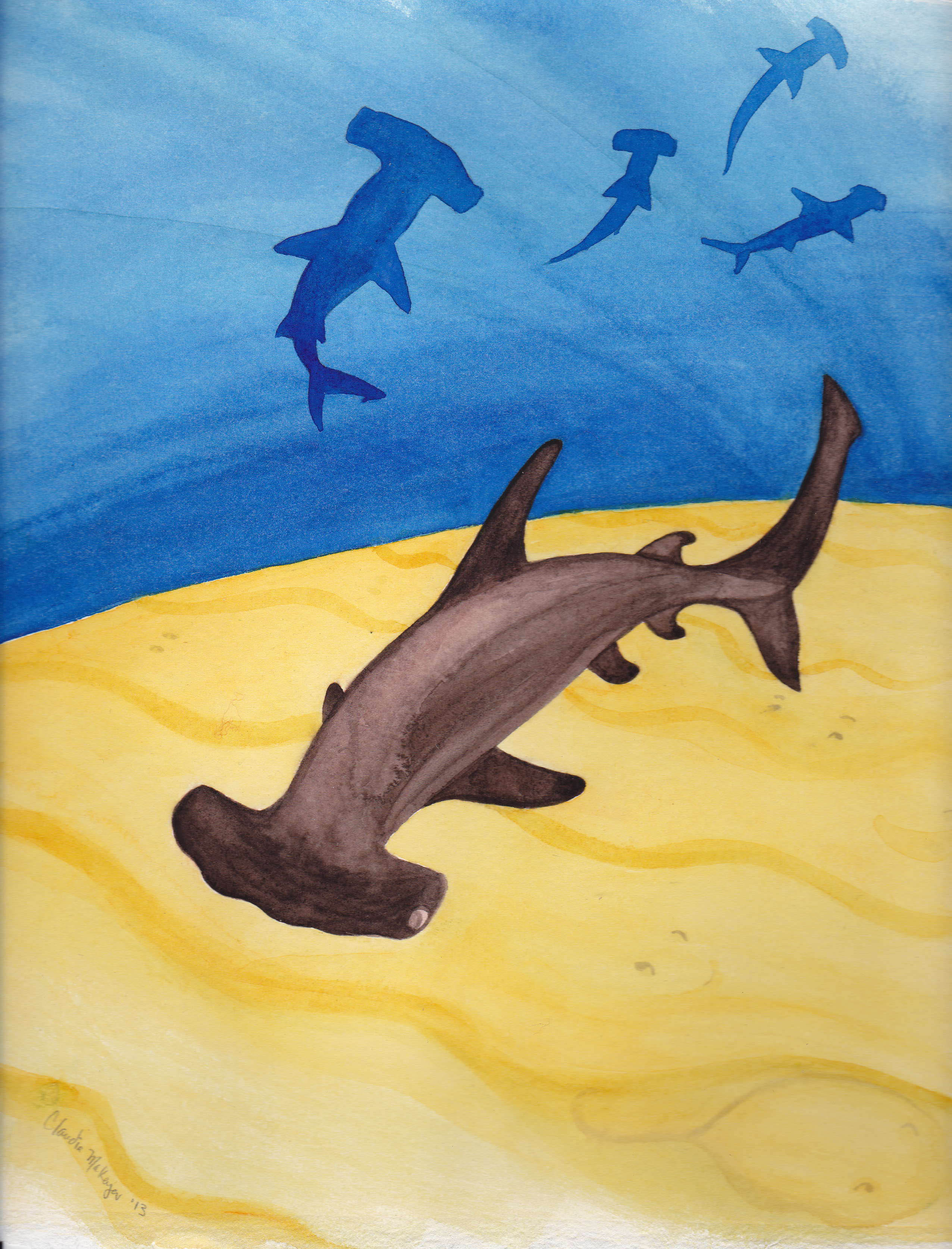
H is for Hammerheaded Hammerhead Head Shark
Tagalog: Crosan
Scientific Name: Sphyrna lewini
This shark has a humungous hammer shaped head.
A Hammerhead can find his favorite foods hidden under the sand, like the stingray.
His head has pores filled with electric jelly that can sense other animals even when they are hidden.
You can also call these jelly pores “electroreceptors” or “galvanic cells”
The bigger the head, the more pores and therefore it’s easier for this shark to detect electric impulses from other sea creatures.
Finding invisible things is this sharks special power so playing hide and seek with him is not recommended.
E is for Eel
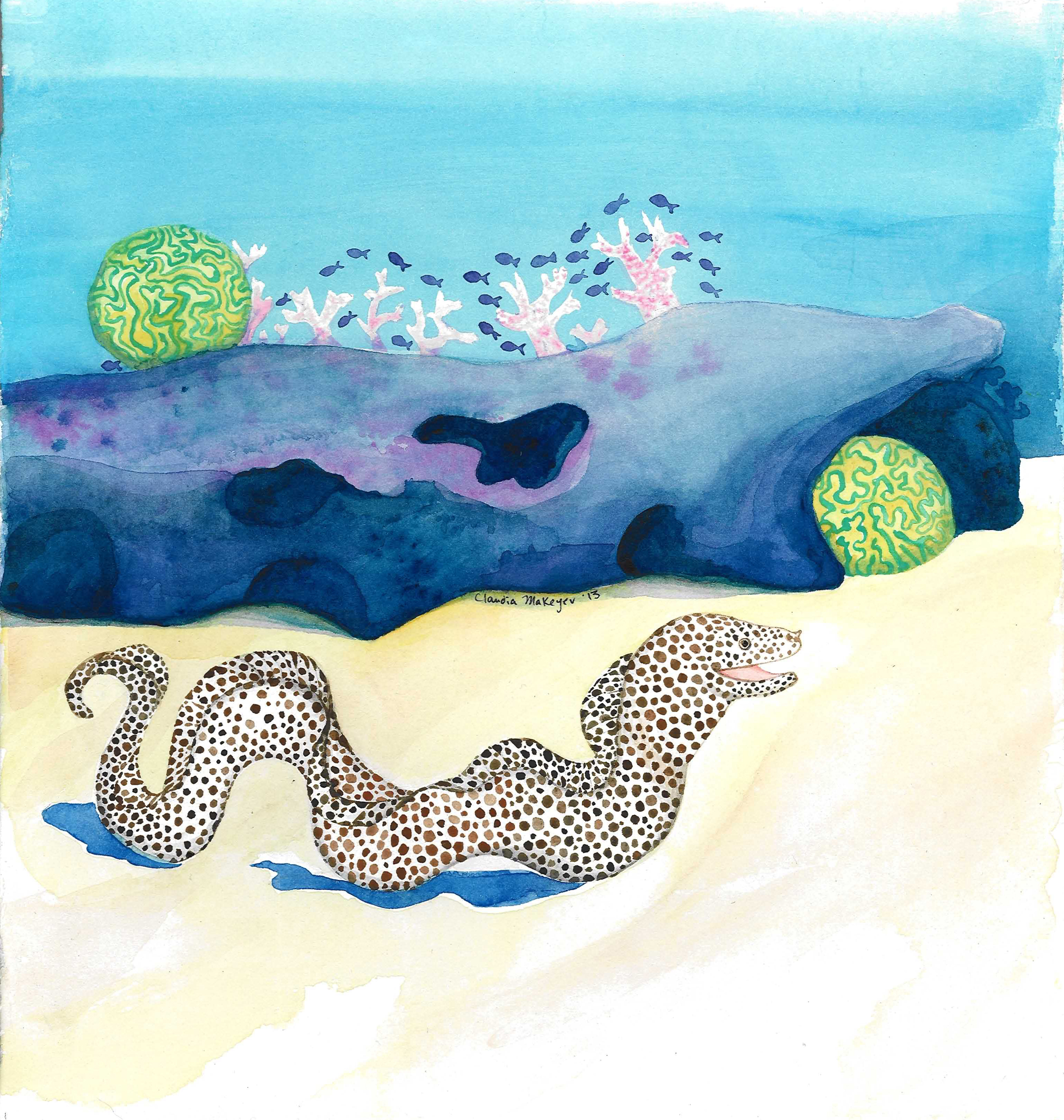
E is for Elongate Eel
Tagalog: Indong
Scientific Name: Gymnothorax isingteena
aka The Spotted Moray
This eel is an eeeelongate fish, his long body is ideally suited to squeeze through small holes in the reef and chase small fishes for dinner.
An interesting hunting partnership developed between Moray eels and Groupers. The Grouper sees where a school of fish have hidden themselves from him in the coral reef, because he is too big to go into these small holes he goes off to find his friend the eel. This eel is a bit nearsighted so the grouper floats right in front of his face and shakes his head back and forth, back and forth. this is their secret code for: “I know where there are some tasty small fish, follow me”. The eel follows the grouper to the place in the reef where the small fish are hiding. He wriggles in and chases them out for the grouper to catch and hopefully manages to catch a few for himself along the way.
 Mermaid Scientist