N is for Nudibranch

nudibranch abc makeyevN is for Nematocyst Nipping Nudibranchs

Scientifice name: Chromodoris elizabethina (left) & Chromodoris annulata

Tagalog: Dugo Dugo

“Nudis” are a brightly beautiful group of sea snails without shells. When you are a tiny, squishy sea creature with out a shell, you can feel a little nude and unprotected. Anemones don’t have shells either but they do have stingers. Nudis have a special way to collect anemone stingers (aka nematocyts).

First they go up to the anemone and touch it to make sure it is really an anemone. Then they retreat back to a safe distance. Next, they charge back to the anemone and start munching on the dangerous tentacles, they swallow the stingers and absorb their power. Soon the little Nudi is able to sting like an anemone.  This is why Nudibranchs eat the poisonous stingers off of anemone tentacles. Stingers are not just delicious treat for these brilliant little sea slugs.
M is for Mola Mola

mola mola

M is for Mola Mola

Scientific Name: Mola mola

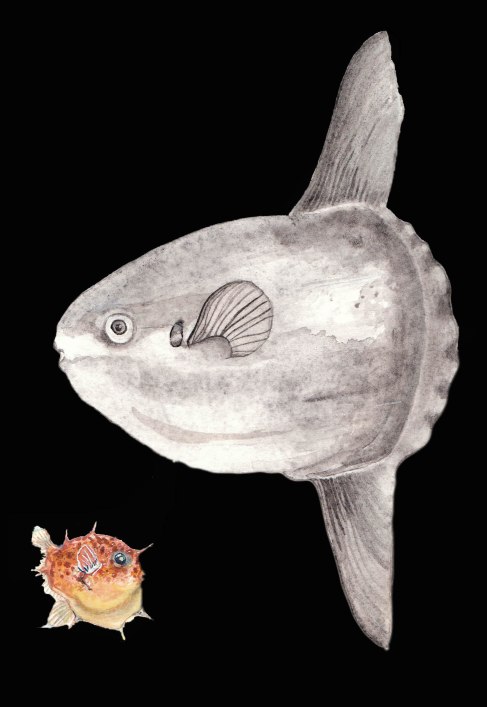
The Mola Mola is also known as The Sunfish because she likes to bask in the sun. She dives into the cold dark depths of the ocean to fill up her belly with jellyfish. When the cool deep waters chill her bones, she swims all the way back up, up, up to the surface, lies on her side and soaks up the warm sun rays. Sometimes a sea bird will drop down and pick off all the little hitchhiking bugs on her tail. Because they are so slow and docile, they are the most highly parasitized fish in the ocean (Disgustingly long tape worms are a common hitchhiker).

The little orange fish on the left is a baby picture, from when she was a teeny tiny microscopic mola mola floating in the plankton as she grew and grew. Molas are the largest teleosts and grow from 10 microns to over 10 feet wide.

I is for Ichthyologist

Ichthyologist and Mermaid discussionI is for Ichthyologist

ICK-THEEE-O-LOW-GEST     –  Ichthyologist!

This is a name for a person often found in the water. They are scientists who study fish, count fish, dream about fish and collect data to unlock the secret lives of fishes.

Ocean enthusiastic kids have inquired on how to become a mermaid. The answer lies in the theme of this book and my response back to these mermaid scientist “sea fans” focuses on the importance of gaining knowledge about the ocean and all its fishes, and that creating this deeper understanding between yourself and the ocean is the crux of becoming a mermaid. The study of Ichthyology is an age old mermaid tradition.

To all aspiring Mermaids aka Ichthyologists I say: Learn! Read! Enjoy! and before long, you will understand what it is to be half fish.

Side note:  The Father of Ichthyology was a swedish naturalist Peter Artedi, who mysteriously disappeared in the waters of Amsterdam. This epitaph was written in latin by Anders Celsius, translated by George Shaw and quoted in Linnaeus’s publication of the Ichthyologia: Here lies poor Artedi, in foreign land pyx’d

Not a man nor a fish, but something betwixt,
Not a man, for his life among fishes he past,
Not a fish, for he perished by water at last.

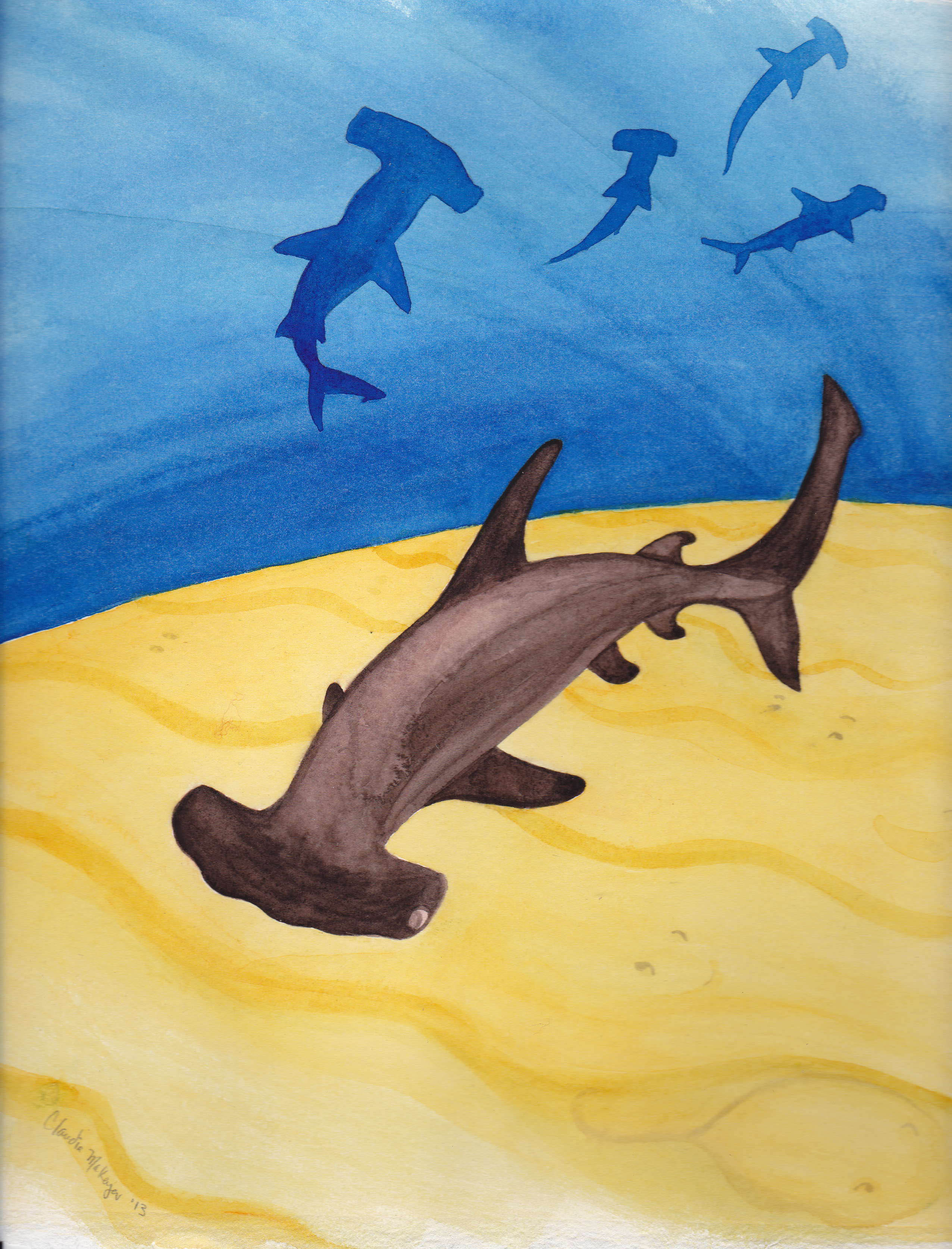
H is for Hammer Headed Hammer Head Shark

hammer head shark
Scalloped Hammer Head Shark

H is for Hammerheaded Hammerhead Head Shark

Tagalog: Crosan

Scientific Name: Sphyrna lewini

This shark has a humungous hammer shaped head.

A Hammerhead can find his favorite foods hidden under the sand, like the stingray.

His head has pores filled with electric jelly that can sense other animals even when they are hidden.

You can also call these jelly pores “electroreceptors” or “galvanic cells”

The bigger the head, the more pores and therefore it’s easier for this shark to detect electric impulses from other sea creatures.

Finding invisible things is this sharks special power so playing hide and seek with him is not recommended.

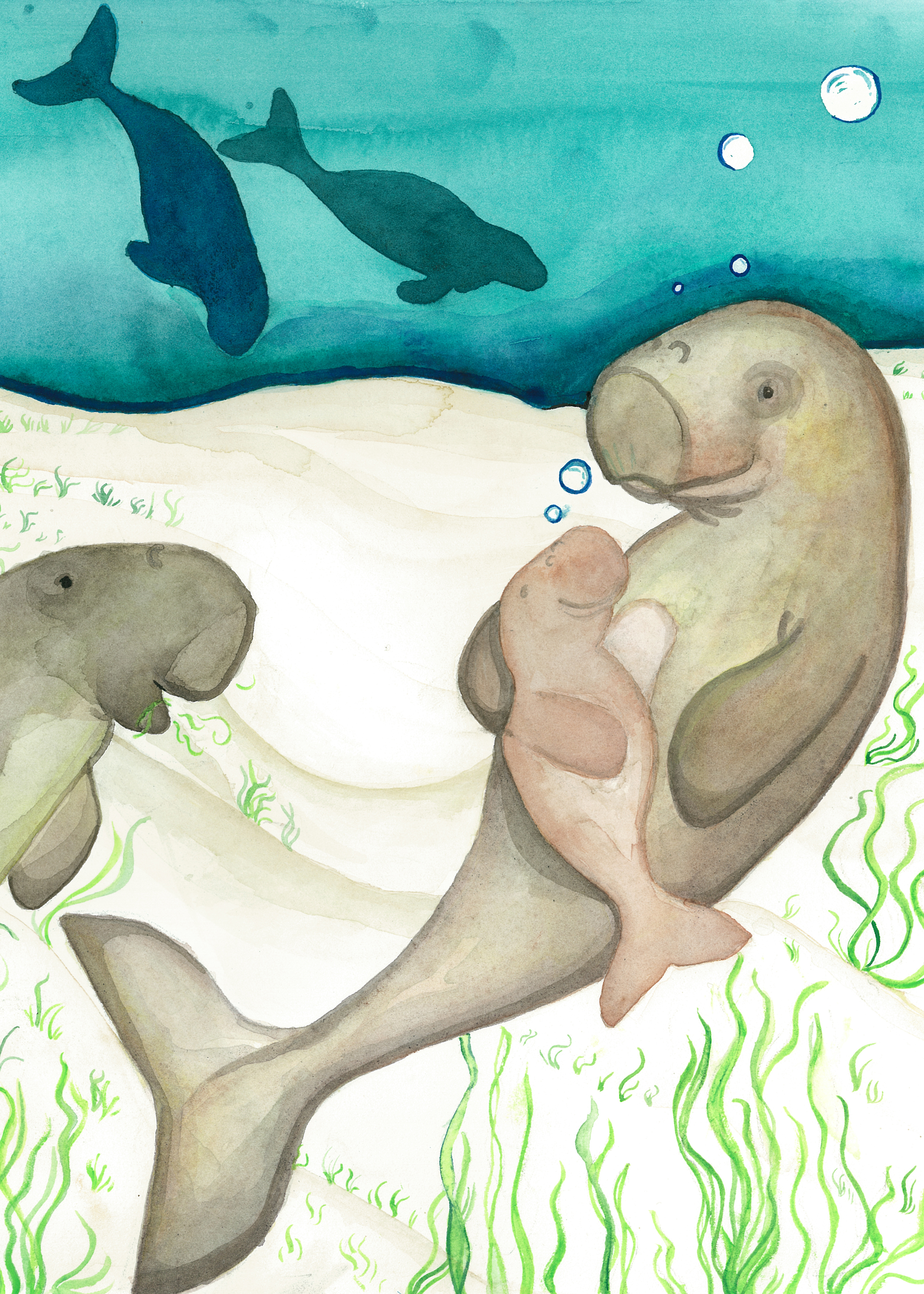
D is for Dugong

Dugongs
D is for Dugong
a water color by Claudia Makeyev

D is for Dugong

Tagalog: Duyong

Scientific name: Dugong dugon

We delight in devouring delicious, delicate sea grass shoots.

We’re shaped like manatees and have dolphin tails to boot
Underwater we swim, sleep, and eat but we are not fish.

Dugongs are actually mammals, Isn’t that neat?